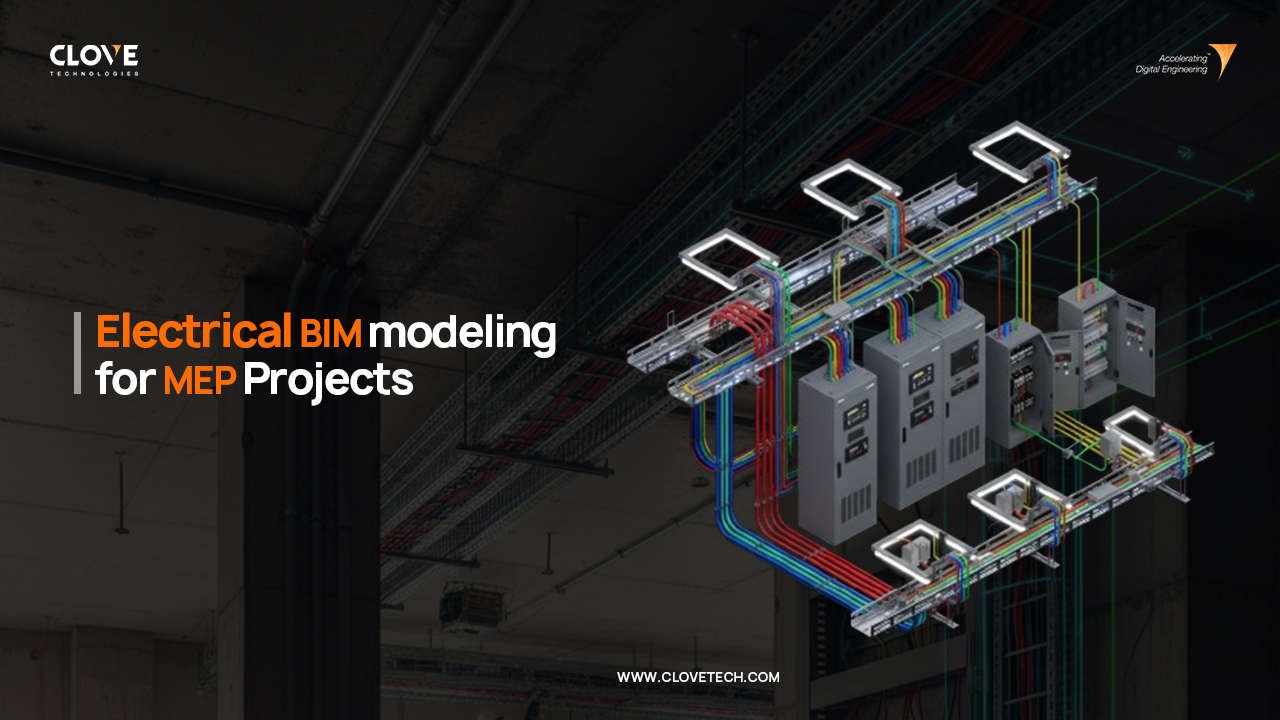
Modern construction projects are no longer linear or siloed. Electrical systems must coexist seamlessly with mechanical and plumbing networks, architectural intent, and structural constraints. In this environment, Electrical BIM Modeling has emerged as a foundational pillar for accurate design, coordination, and execution.
Electrical BIM Modeling enables project stakeholders to visualize, analyze, and coordinate electrical systems within a shared digital environment. For MEP-intensive projects, this capability directly determines project efficiency, cost control, and risk reduction. As coordination complexity increases, the question is no longer if Electrical BIM should be adopted, but how effectively it is implemented.
This article explains why electrical BIM modeling is important, how it improves MEP BIM Coordination, and the measurable advantages it delivers throughout the construction lifecycle.
What Is Electrical BIM?
Electrical BIM is the process of creating intelligent, data-rich 3D models for electrical systems, including:
• Power distribution
• Lighting systems
• Cable trays and conduits
• Panels, switchboards, and transformers
• Low-voltage systems (fire alarm, security, data)
Unlike traditional 2D drawings, electrical BIM modeling embeds parameters such as load data, circuit information, clearances, and equipment specifications directly into the model.
The Coordination Challenge in MEP Projects
MEP systems share limited spatial zones ceilings, risers, shafts, and service corridors. Without digital coordination, conflicts are inevitable. Typical issues include:
• Cable trays clashing with HVAC ducts
• Lighting fixtures conflicting with sprinkler layouts
• Panel locations obstructing maintenance access
Traditional workflows detect these problems only on-site, leading to rework, delays, and cost overruns.
This is where Electrical BIM becomes critical.
Centralized MEP BIM Coordination Environment
Electrical BIM modeling integrates electrical systems into a federated MEP model alongside mechanical and plumbing services. This shared environment enables:
• Real-time visibility across disciplines
• Early identification of spatial conflicts
• Alignment with architectural and structural constraints
With effective MEP BIM coordination, teams collaborate proactively rather than reactively.
Advanced Clash Detection in MEP BIM
One of the strongest advantages of Electrical BIM is its role in clash detection MEP BIM workflows.
Electrical BIM models allow automated detection of:
• Hard clashes (physical overlaps)
• Soft clashes (clearance and maintenance access issues)
• Workflow conflicts (installation sequencing problems)
By resolving clashes digitally, electrical BIM modeling reduces site-level RFIs, redesign cycles, and schedule disruptions.
Improved Design Accuracy and Constructability
One of the most cited electrical BIM benefits for design accuracy is precision.
Electrical BIM modeling ensures :
• Correct routing of conduits and cable trays
• Accurate load calculations and circuiting
• Proper spacing for equipment maintenance
This level of detail significantly improves constructability, reducing assumptions and interpretation errors during execution.
Reduced Rework and Cost Overruns
When electrical systems are coordinated early using BIM, conflicts are resolved before procurement and installation. This minimizes:
• Material wastage
• Labor rework
• Change orders
The advantages of electrical BIM in construction directly translate into predictable budgets and timelines.
Faster Decision-Making for Stakeholders
Because electrical BIM models are visual and data-driven, stakeholders can:
• Evaluate design options quickly
• Validate layouts against operational requirements
•Make informed decisions without waiting for revised drawings
This accelerates approvals and keeps MEP projects moving forward.
Seamless Integration with Other BIM Processes
Electrical BIM modeling supports downstream BIM workflows such as:
• 4D construction sequencing
• 5D cost estimation
• Asset data handover for facility management
This makes Electrical BIM a long-term investment, not just a design-phase tool.
Not all BIM implementations deliver the same value. The effectiveness of Electrical BIM depends heavily on modeling standards, coordination experience, and domain knowledge.
A specialized Electrical BIM modeling company brings:
• Proven MEP coordination workflows
• Discipline-specific clash resolution strategies
• Compliance with international BIM standards
This expertise ensures that electrical BIM modeling supports real-world construction outcomes—not just visually impressive models.
As projects become more complex and schedules tighter, Electrical BIM will play an even greater role in:
• Design-for-installation strategies
• Prefabrication and modular MEP systems
• Digital twins and operational asset management
Early adoption of robust electrical BIM modeling positions project teams ahead of these industry shifts.
Electrical BIM is no longer a supporting function it is a coordination backbone for modern MEP projects. From clash detection MEP BIM to improved design accuracy and reduced construction risk, the value is both immediate and long-term.
For organizations seeking scalable, future-ready MEP workflows, investing in high-quality electrical BIM modeling is a strategic decision, not a technical upgrade.
At Clove Technologies, we specialize in Electrical BIM Modeling, MEP BIM coordination, and advanced clash detection MEP BIM workflows tailored for complex construction projects.
If you are looking to improve coordination accuracy, reduce rework, and gain predictable project outcomes, our BIM experts can help you move from fragmented drawings to fully coordinated digital delivery.
Let’s discuss how Clove Technologies can turn Electrical BIM into a measurable project advantage.
Discover more of our innovative blogs

How Scan to BIM Supports MEP Coordination in Complex Structures

Behind Great Builds: Meet the Leading BIM Experts

Precision in Construction – Scan to BIM Perfection

How to Choose the Right CAD Drafting Company
Let's Talk
Let’s discuss your requirements and see how our expertise can help on your next project.