
In today’s construction and infrastructure world, where precision is key, reality-capture workflows are no longer optional; they are essential for accurate design, avoiding clashes, and data-driven execution. Scan to CAD or Scan to BIM is the most important choice that will shape this change.
Both workflows use 3D Laser Scanning to turn real-world conditions into digital assets, but they do so for different project goals. Selecting the right service is a matter of project scope, lifecycle needs, and information depth not just budget.
This guide clarifies the Scan to CAD vs Scan to BIM comparison, explains the Scan to BIM workflow, and helps you determine which solution best suits your project requirements.
The process of converting point cloud data obtained using laser scanners or LiDAR into precise 2D CAD drawings, including plans, sections, elevations, and fundamental deliverables required for documentation or renovation layouts, is known as Scan to CAD.
Key Features of Scan to CAD Services
- Generates 2D drawings (DWG or DXF formats)
- Ideal for as-built floor plans and elevations
- Faster turnaround compared to BIM modeling
- Supports refurbishment, space planning, and permit documentation
- Minimal modeling complexity
When projects don’t need data-rich 3D building models and only need dimensional accuracy, layout verification, or simplified representation, scan to CAD services are ideal.
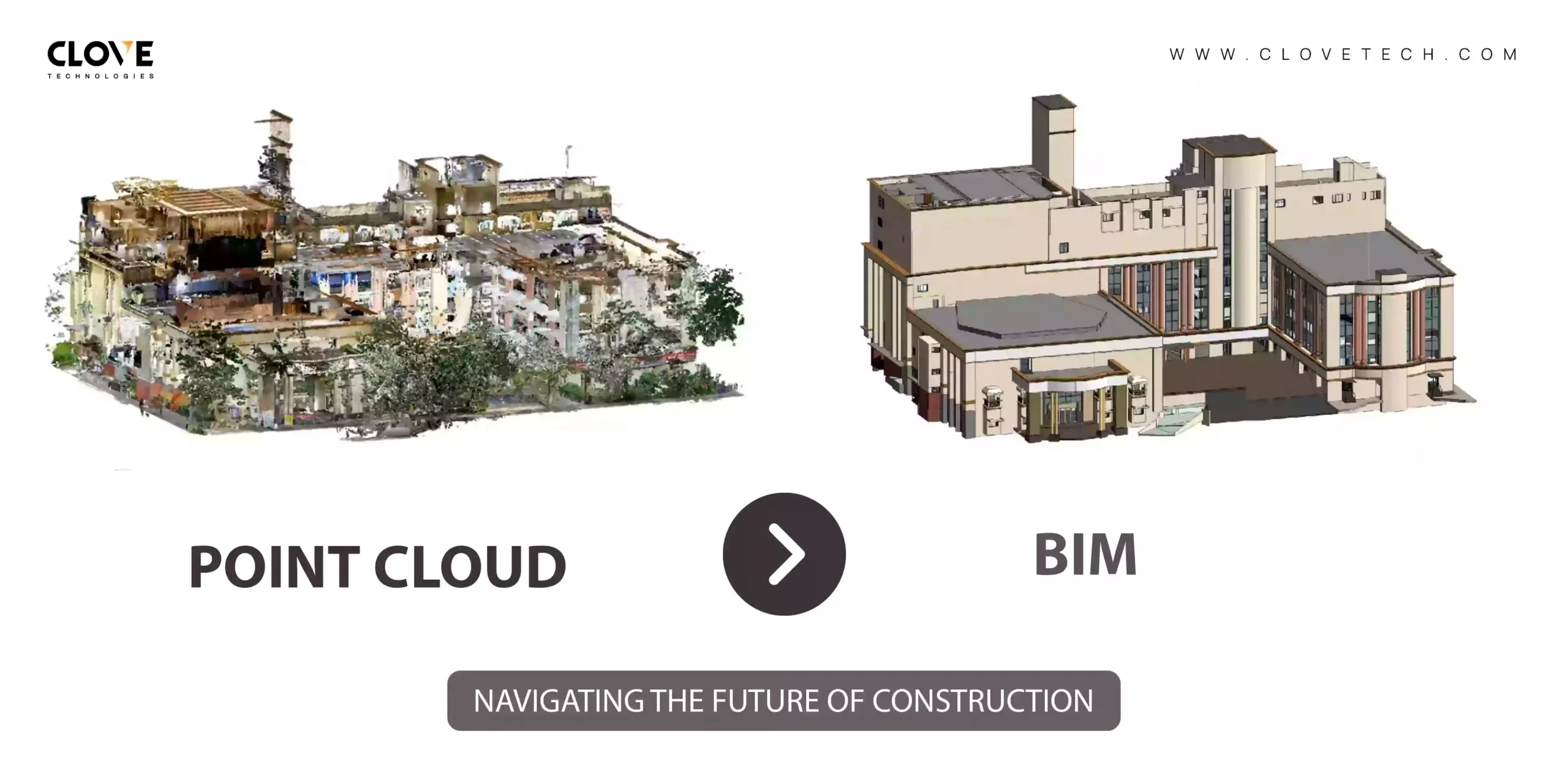
A fully structured 3D Building Information Model that represents architectural, structural, and MEP components as intelligent objects is created by Scan to BIM.
The Scan to BIM Workflow
The standard Scan to BIM workflow includes
- Laser Scanning / Reality Capture
- Point Cloud Registration & Cleaning
- LOD-Based 3D Modeling
- System Classification (A/S/MEP)
- Data Validation & Clash Alignment
- Delivery in IFC / Revit Formats
Key Features of Scan to BIM Services
- Produces LOD 200 – 500 intelligent BIM models
- Includes materials, parameters, and asset info
- Enables clash detection and coordination
- Supports facility management operations
- Integrates with digital twin platforms
Scan to BIM services offer an actionable digital asset that is valuable throughout the building lifecycle, from operations and maintenance to renovation planning, in contrast to CAD outputs.
| Aspect | Scan to CAD | Scan to BIM |
|---|---|---|
| Output | 2D drawings | Intelligent 3D BIM model |
| Level of Detail | Geometry only | Geometry + metadata |
| Use Case | Renovations, layouts | Coordination, digital twins |
| MEP Integration | Limited | Full system modeling |
| Clash Detection | Not supported | Supported |
| Facility Management | Not suitable | Fully compatible |
| Project Lifecycle Value | Single phase | Multi-phase asset |
•Choose Scan to CAD when you need straightforward documentation.
•Choose Scan to BIM when your project needs data-rich coordination, construction accuracy, and long-term digital use.
During evaluation of Scan to CAD vs Scan to BIM, the determining factor is project complexity and lifecycle intent.
✅ Scan to CAD Is Ideal For
- Quick space planning updates
- Historic or low-detail renovations
- Permit drawings and layout verification
- Budget-constrained documentation needs
✅ Scan to BIM Is Ideal For
- Large commercial developments
- Hospital or infrastructure modernization
- MEP retrofit coordination
- Digital twin implementation
- Facility operations planning
Scan to BIM consistently yields higher long-term ROI for projects requiring advanced coordination or continuous asset intelligence.
Clove Technologies delivers accuracy-first reality capture conversion for architecture, infrastructure, healthcare, and industrial projects worldwide.
Our Competitive Strengths
• Multi-disciplinary Scan to CAD & Scan to BIM services
• LOD 100 – 500 compliant BIM modeling
• ISO-aligned QA verification
• Rapid turnaround for refurbishment and brownfield projects
• IFC delivery for interoperability workflows
Whether you require swift Scan to CAD drafting or enterprise-grade Scan to BIM workflows, our teams ensure dimensional reliability, data validation, and coordination readiness at every stage.
In the Scan to CAD vs Scan to BIM decision, the correct choice depends on whether your project demands documentation accuracy or integrated digital intelligence.
- Short-term layouts → Scan to CAD
- Long-term coordination and asset management → Scan to BIM
Choosing wisely means optimizing not just cost but project outcomes and operational efficiency.
Upgrade Your Next Project with Precision Reality Capture
If you’re evaluating professional Scan to CAD services or need advanced Scan to BIM solutions, Clove Technologies is your trusted implementation partner.
Contact Clove Technologies today to receive a free project assessment and discover how our reality-to-model expertise can unlock measurable cost savings, coordination clarity, and faster delivery for your next build.
Discover more of our innovative blogs

How BIM Helps U.S Contractors Reduce Rework & Improve Collaboration

Top MEP BIM Services in the USA
From Scan to Structure: Converting Point Clouds into BIM

What is Scan to BIM
Let's Talk
Let’s discuss your requirements and see how our expertise can help on your next project.