
Coordinating Mechanical, Electrical, Plumbing, and Fire Protection (MEPF) systems in large-scale construction projects is no small feat. From clashes in tight ceiling spaces to delays from missing field data, poor coordination is a major reason for budget overruns and schedule delays.
If your team is dealing with outdated site data, coordination issues, or costly rework, Clove Technologies offers proven BIM workflows that reduce risk, improve constructability, and deliver better project outcomes right from day one.

Relying on 2D drawings or isolated models often results in spatial clashes between architecture, structure, and MEPF systems usually discovered in the field when it’s too late.
With BIM-based coordination, these clashes are detected and resolved during preconstruction using federated models in tools like Navisworks or BIM Collaborate Pro.
Conflicts like duct vs. beam or pipe vs. soffit are identified early, reducing RFIs and rework.
A structured coordination workflow complete with trade engagement, weekly reviews, and issue tracking is key to a smooth install phase.

From design intent to field execution
Model detail is defined by LOD (Level of Development). For construction, LOD 300–500 provides the fabrication-ready detail required on-site, including:
- Exact dimensions and routing
- Required clearances and access zones
- Hangers, sleeves, and penetrations
- Installation constraints
With highly detailed, clash-free models, teams reduce RFIs, avoid delays, and support prefabrication. LOD 400+ models also streamline handovers to facilities teams.
Field execution
By working with highly detailed, coordinated models, project teams reduce RFIs, eliminate shop drawing back-and-forth, and enable faster, smoother installations reducing field issues and changing orders. LOD 400+ models also support prefabrication and streamline handover to facilities teams.
Why it’s essential
In renovation and tenant improvement (TI) projects, reliable as-built data is often missing. Designing around guesswork leads to surprises once demolition starts.
The workflow
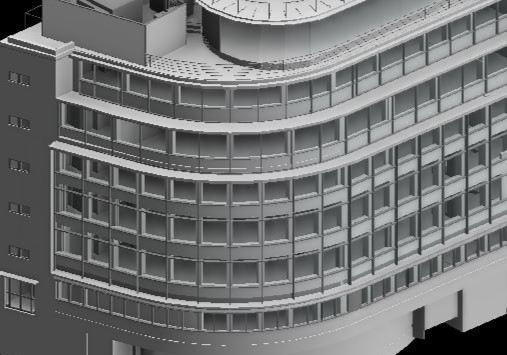
Scan to BIM uses 3D laser scanning and BIM modeling to create accurate Revit models reflecting true site conditions geometry, elevation, obstructions, and more.
Ideal for:
- Historic preservation
- Healthcare or education retrofits
- MEP-heavy spaces like data centers and mechanical rooms
Result: Better alignment, faster coordination, fewer change orders.

What Goes Wrong
- Coordination happens too late
- Models are uncoordinated across trades
- Updates are inconsistent or mismanaged
- RFIs flood the project during construction
➤ What works
- Early trade involvement
- Weekly clash resolution sessions
- Use of federated, discipline-specific models
- Tools like BIM Track, Revizto, and Navisworks for issue tracking
- A clear BIM Execution Plan (BEP) and trade coordination protocol
These practices ensure smoother collaboration, material optimization, and fewer delays.
Looking to improve BIM coordination, reduce rework, or streamline MEPF workflows? Our guide offers proven strategies used across U.S. projects.
Whether you’re working on new construction, adaptive reuse, or complex fit-outs, Clove Technologies provides practical, field-tested BIM support.
Want to discuss how we handle MEPF modeling and coordination at each project stage?
Get Started with Clash-Free MEPF Coordination Today – Contact Clove Technologies!
Discover more of our innovative blogs

What is Scan to BIM

The Role of Scan to BIM in the Digital Transformation of Construction

AI for BIM

Transforming Construction Projects with PDF to BIM Conversion: Top Benefits You Should Know
Let's Talk
Let’s discuss your requirements and see how our expertise can help on your next project.