Plumbing & Public Health
Engineering Water and Sanitation Systems for Reliable, Efficient and Healthy Facilities

Designing plumbing and public health systems that support water efficiency, hygiene, reliability, maintainability, and long-term facility performance.
Plumbing and Public Health Engineering plays a critical role in ensuring that buildings can reliably manage water supply, drainage, sanitation, and essential public health requirements. Clove Technologies integrates hydraulic analysis, system design, equipment selection, BIM coordination, and performance considerations into a connected engineering workflow. From commercial and residential developments to healthcare, industrial, and mission-critical facilities, our teams engineer systems around demand, pressure, flow, drainage capacity, space constraints, applicable standards, and operational requirements. By coordinating plumbing systems within a unified digital environment, organisations can identify design conflicts early, improve constructability, optimise resource use, and deliver infrastructure built for dependable long-term operation.
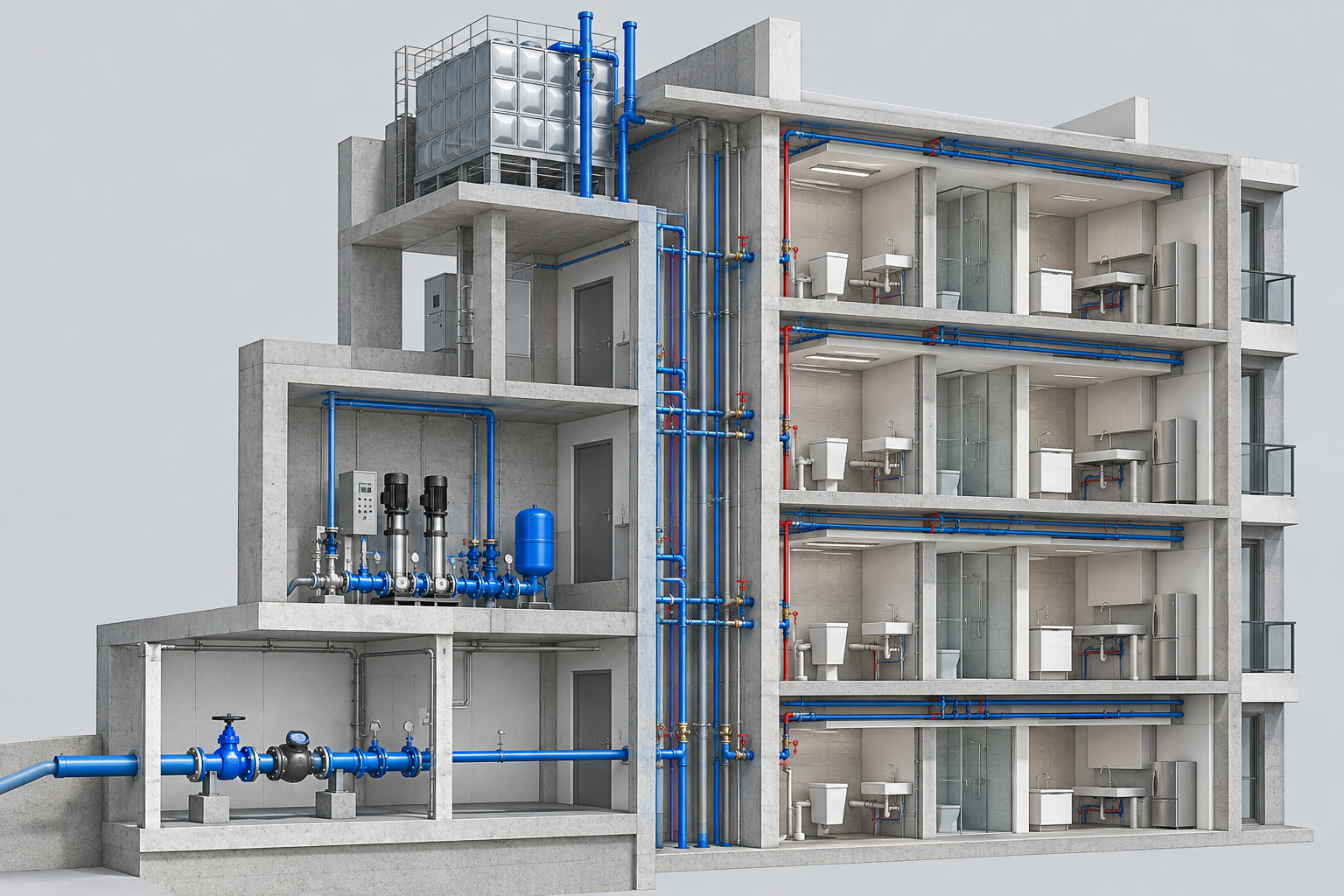

Water Supply System Design
Design reliable domestic, potable, hot, and cold-water distribution systems based on demand, pressure, and operational requirements.
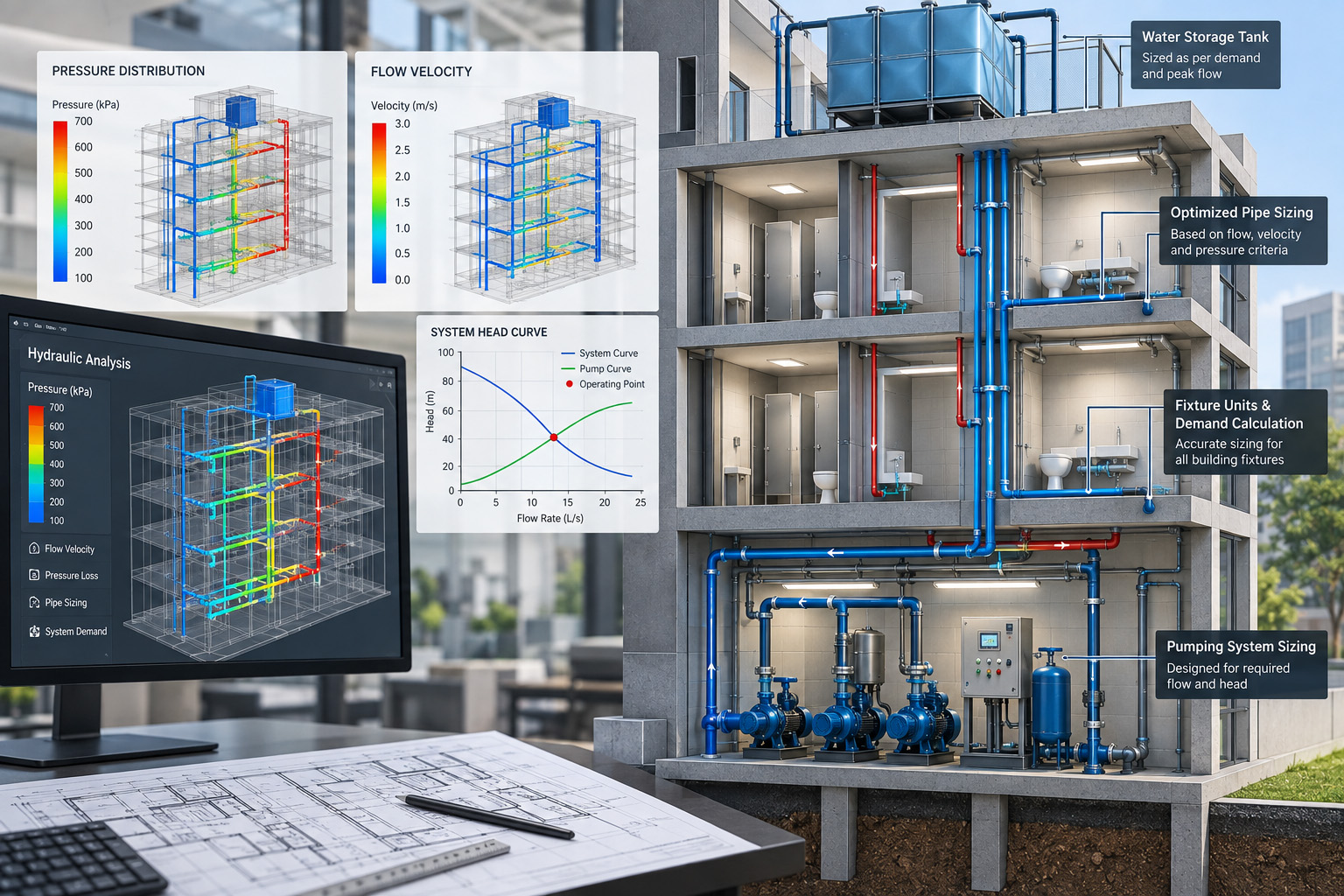
learn moreHydraulic Analysis & Sizing
Analyse flow, pressure, pipe sizing, pump requirements, storage capacity, and distribution performance to design efficient systems.
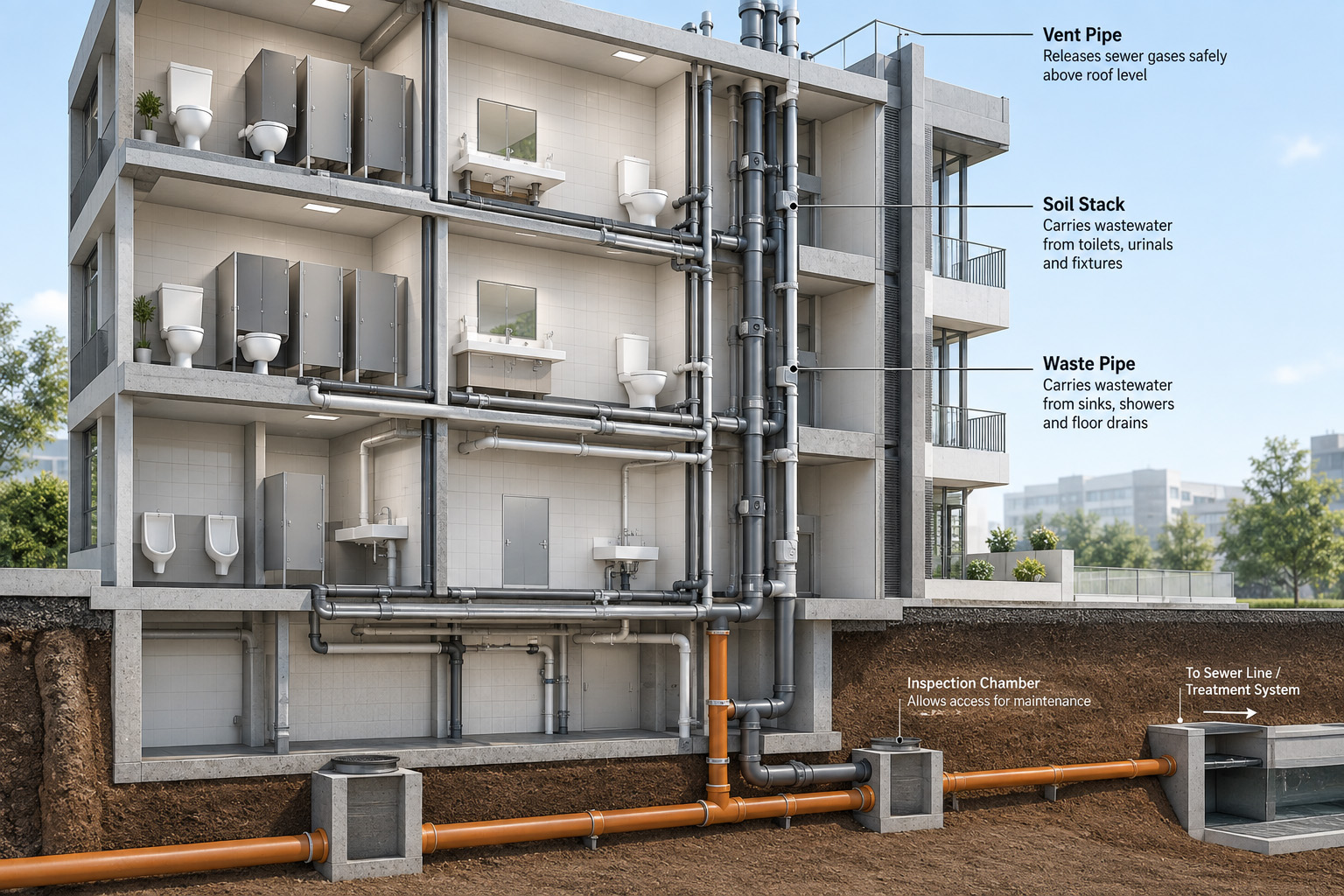
learn moreDrainage & Sanitary Systems
Engineer soil, waste, vent, and sanitary drainage systems for effective flow, capacity, hygiene, and maintainable operation.
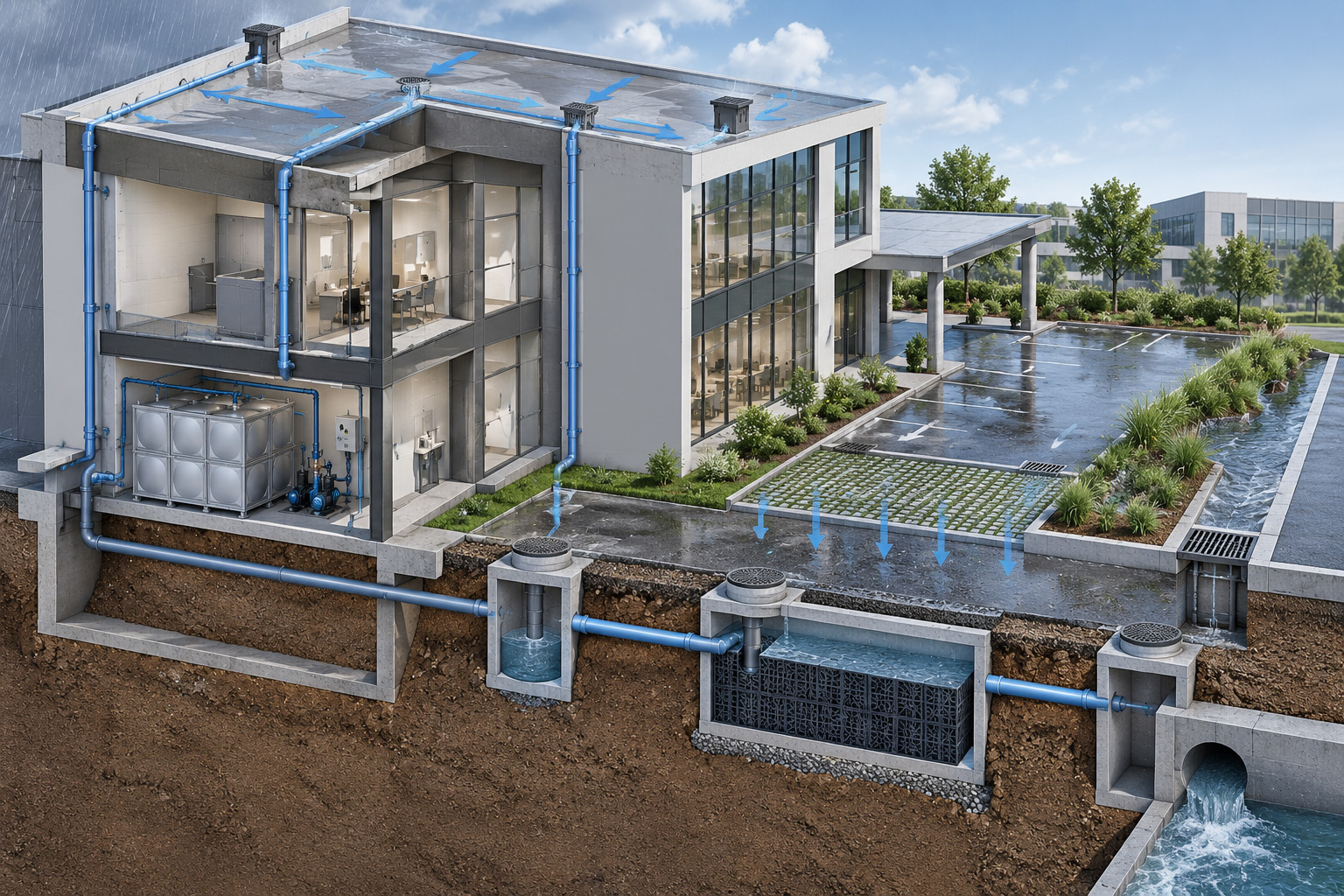
learn moreStormwater Management
Develop rainwater drainage and stormwater systems designed around site conditions, rainfall intensity, discharge requirements, and flood resilience.
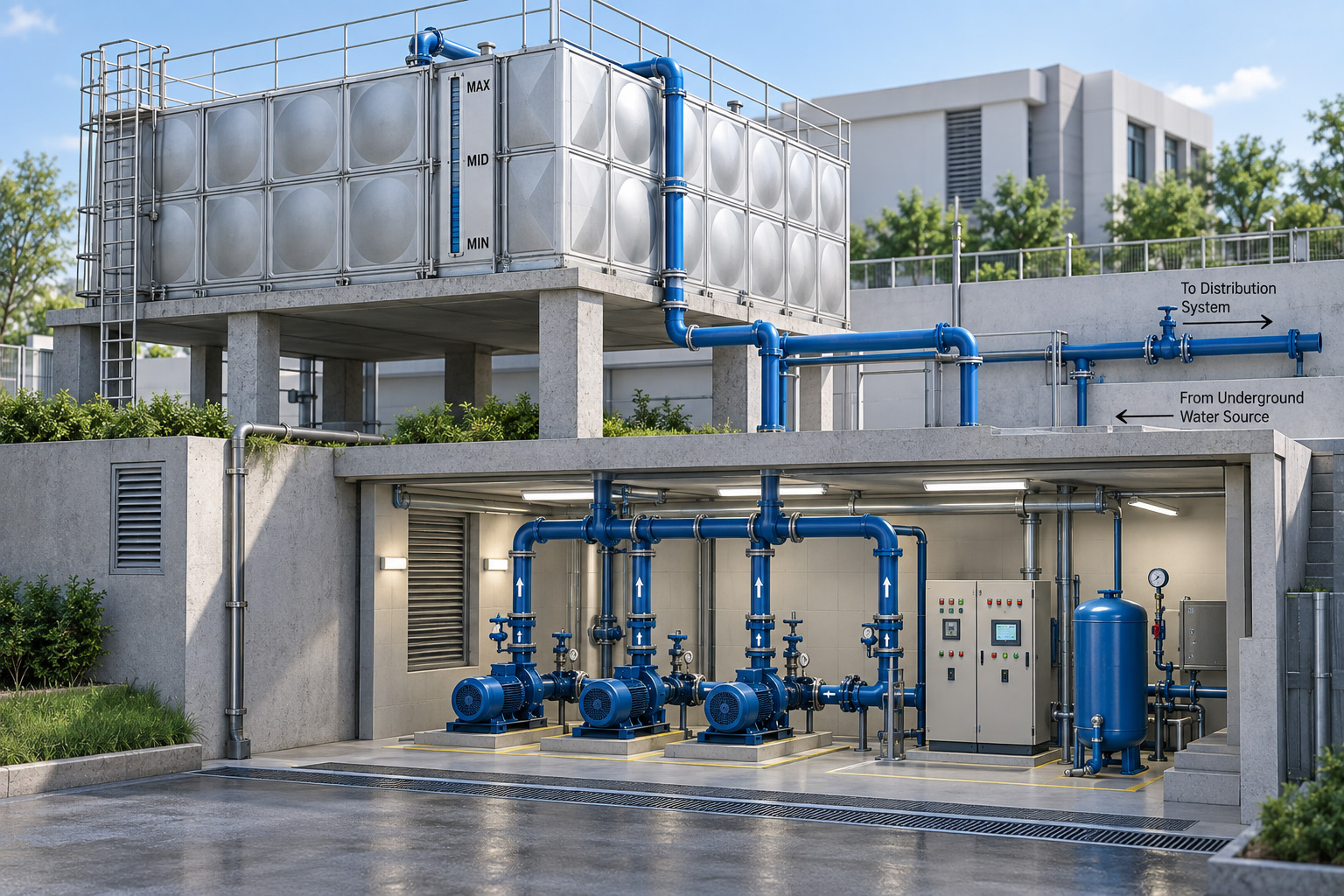
learn moreWater Storage & Pumping Systems
Design tanks, transfer systems, booster pumps, circulation systems, and associated infrastructure to maintain reliable water availability.
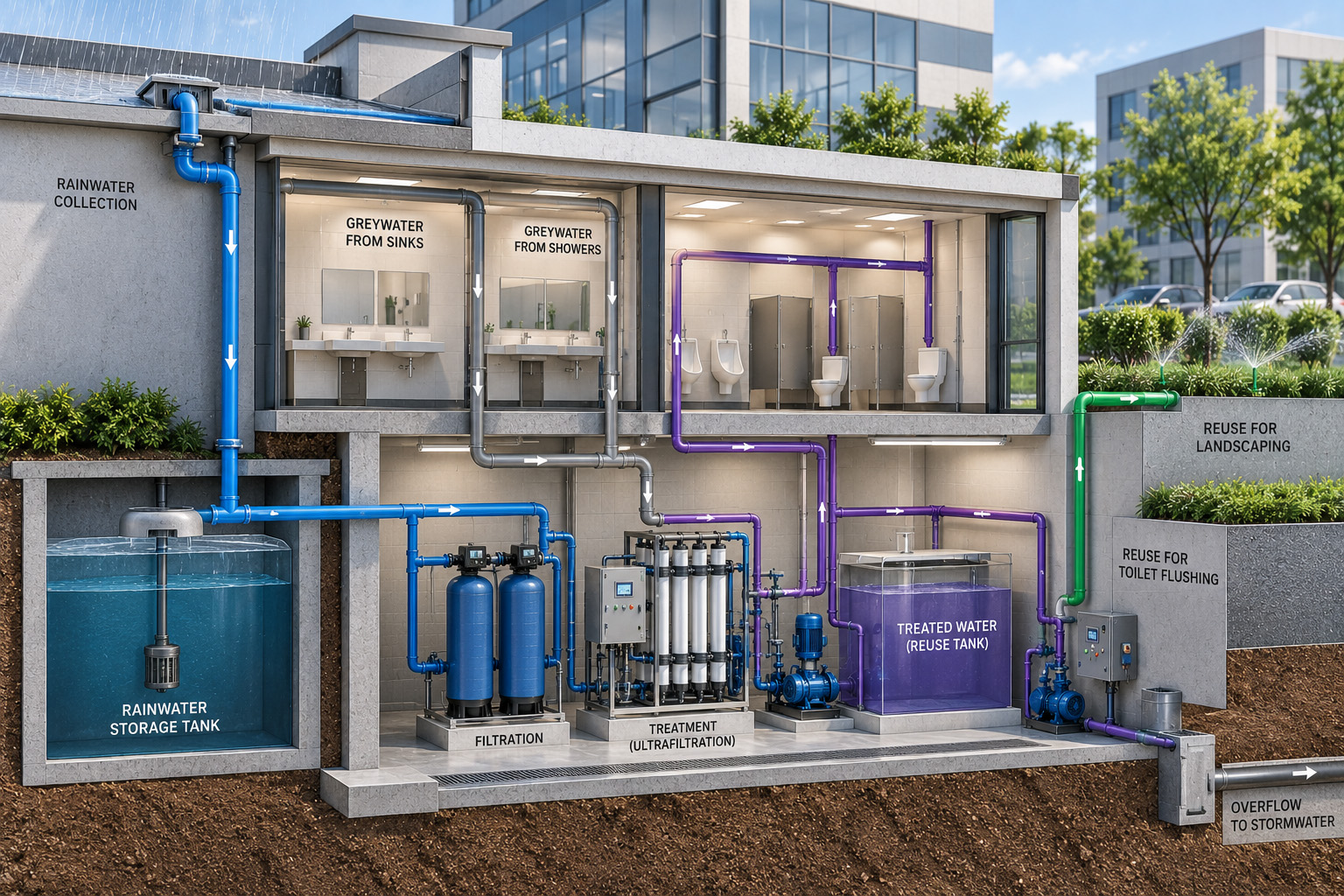
learn moreWater Conservation & Reuse
Integrate rainwater harvesting, greywater reuse, water-efficient fixtures, and demand-management strategies to support sustainable water use.
learn morePublic Health & Hygiene Systems
Engineer plumbing infrastructure around hygiene, sanitation, contamination control, and the specific requirements of healthcare and other sensitive environments.
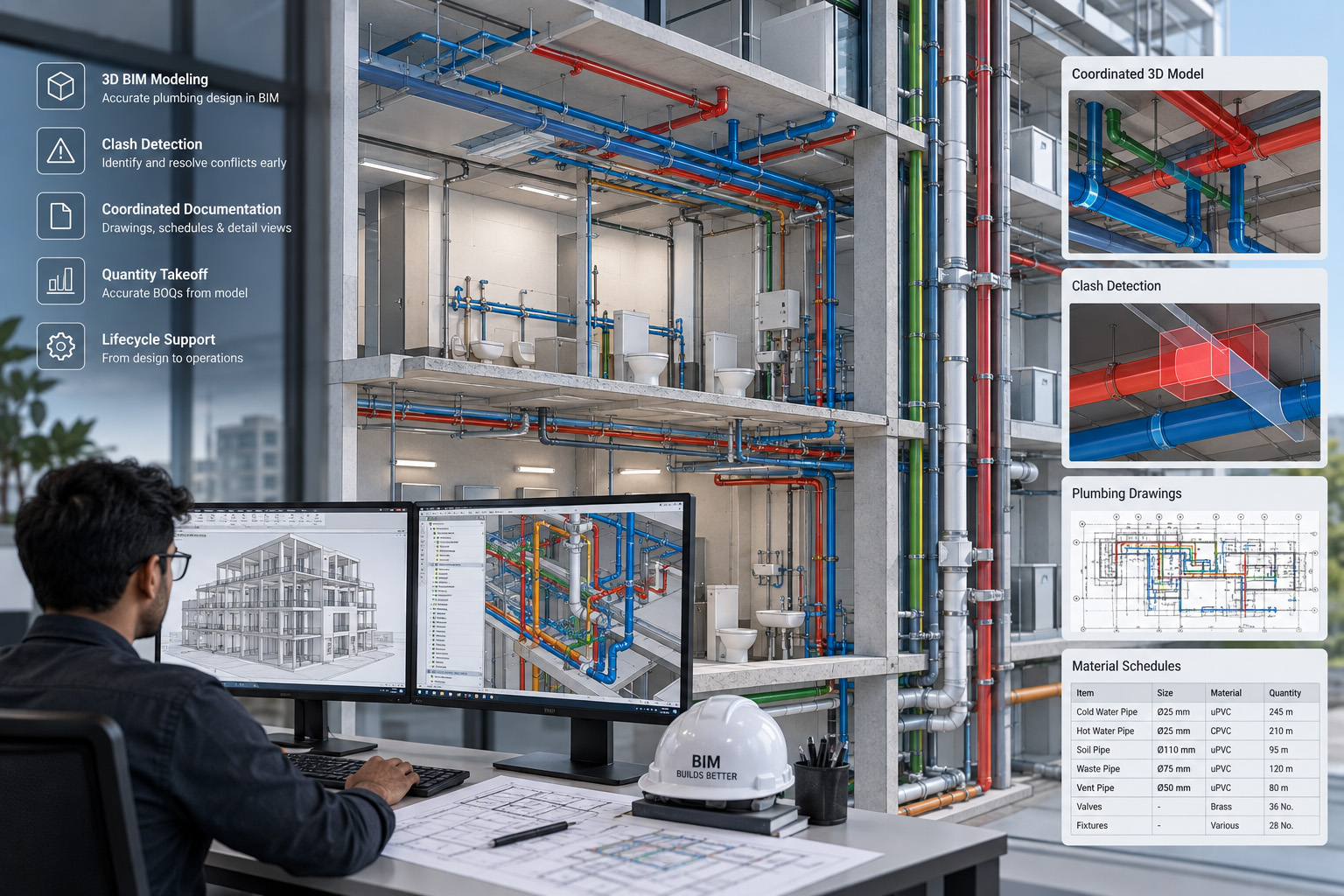
learn moreBIM-Integrated Plumbing Engineering
Translate plumbing design into coordinated, information-rich BIM models to improve multidisciplinary coordination, construction delivery, and handover.
learn moreOUR OFFERINGS

FAQ
It covers water supply, hot and cold water systems, sanitary drainage, stormwater, hydraulic analysis, water storage and pumping, water conservation, reuse systems, and BIM-integrated plumbing engineering.
Hydraulic analysis helps determine appropriate pipe sizing, flow rates, pressure requirements, pump capacity, and system performance across the facility.
Yes. Plumbing engineering can incorporate water-efficient fixtures, rainwater harvesting, greywater reuse, demand management, and other resource-efficiency strategies where appropriate.
Yes. Stormwater engineering can address rainfall conditions, drainage capacity, site requirements, discharge, and effective management of surface water.
Yes. BIM allows water supply, drainage, equipment, and other plumbing systems to be coordinated with architectural, structural, and MEP systems.
Yes. Existing conditions can be documented and coordinated to support renovation, retrofit, expansion, and future facility modifications.
Let's Talk
Let’s discuss your requirements and see how our expertise can help on your next project.