Digital Twin Software and Platforms: A Practical Guide to Features, Applications, and Selection

Managing buildings, industrial facilities, and infrastructure used to mean juggling disconnected drawings, spreadsheets, and monitoring tools. Digital twin software changes that by linking engineering data with real-world asset performance inside a single digital environment.
For construction firms, facility owners, and engineering teams, this shift yields asset visibility gains. It supports better maintenance planning and life-cycle data use. Digital twin platforms vary: some focus on building operations, while others serve industrial equipment, networks, or fully custom IoT deployments. Picking the right one starts with understanding what these platforms actually do.
Digital twin software creates, manages, and connects a digital representation of a physical asset, building, system, or environment. It pulls together engineering models, asset records, and live operational data to give teams a unified view of how something is actually performing.
Take a commercial building’s BIM model; it typically holds architectural, structural, and MEP information. A digital twin platform builds on that by linking the model to equipment records, building management systems, and live sensor feeds, so facility teams can see both what an asset is and how it’s behaving right now.
The key difference from a static 3D model is that a digital twin stays current but only as far as its data sources and implementation allow.
These platforms combine information from several sources into one digital representation of a physical environment, typically including:
- BIM and CAD models
- Point clouds and LiDAR scans
- IoT sensors
- Building management systems
- Asset and maintenance management software
- GIS and geospatial data
Picture a building with multiple HVAC units feeding data into the twin. If one unit starts reporting abnormal temperatures, the facility team can pinpoint the unit, pull its full history, and investigate all from one interface. The platform doesn’t fix the problem on its own; its value comes from the quality of the connected data and how the team acts on it.
3D Visualization
Rather than digging through separate drawings, users can click an asset in the model and immediately access its data. A facility manager chasing an electrical fault can locate the equipment, see its position in the building, and pull related documentation in seconds.
BIM and Engineering Data Integration
This matters most for construction and facility management use cases. Digital twin platforms build on BIM data often supporting Revit, IFC, and CAD formats as the structural foundation, then layer operational data on top. A BIM model might define an air-handling unit and its specs; the digital twin connects that to live sensor readings, maintenance history, and current status. This is how project data carries into the operational phase instead of getting shelved after handover.
IoT and Sensor Connectivity
Live data feeds from temperature, humidity, energy, vibration, occupancy, and air-quality sensors let teams catch changes as they happen. A spike in energy use in one wing, for example, can be traced to specific equipment and investigated before it becomes a bigger issue.
Asset Information Management
A digital twin should organize more than geometry. Useful platforms structure asset IDs, specs, manufacturer details, installation records, warranties, and maintenance history in one place critical for large facilities where this information is otherwise scattered across departments.
Data Analytics and Monitoring
Dashboards and reporting tools help teams spot trends in energy use, equipment performance, and environmental conditions whether that’s comparing usage across floors or tracking equipment degradation over time. Analytics depth varies significantly between platforms, so it’s worth confirming a tool actually supports the data sources and reports your team needs.
APIs and System Integration
Few organizations run all their engineering and operations data through one system. APIs let a digital twin connect with BMS, CMMS, EAM, IoT platforms, and GIS tools, reducing the disconnected workflows that come from siloed software.
Collaboration and Access Control
With owners, engineers, contractors, and facility teams all touching the same twin, permissions, data ownership terms, and version history matter especially at handover to the asset owner.
Not all digital twins serve the same purpose. Broadly, they fall into four categories:
Building Digital Twin Platforms
Combine BIM models, asset data, and building systems to support performance monitoring, equipment tracking, maintenance planning, space management, energy analysis, and digital handover.
Industrial Digital Twin Platforms
Built for manufacturing plants and production systems, supporting equipment monitoring, simulation, and predictive maintenance value here depending heavily on data quality and system integration.
Infrastructure Digital Twin Platforms
Support bridges, roads, railways, airports, and utility networks by combining engineering models, geospatial data, and reality capture for inspection, asset management, and maintenance planning.
IoT and Custom Digital Twin Platforms
Provide the underlying APIs, data models, and cloud infrastructure for organizations that need a purpose-built solution rather than an off-the-shelf application.
Platforms Worth Knowing
Autodesk Tandem is a cloud platform built around BIM data for creating and managing digital twins of built assets, with strong asset information management, 3D visualization, and IoT connections a fit for teams connecting design data to facility operations.
Bentley iTwin Platform offers APIs and cloud services for infrastructure digital twins, bringing together engineering data, reality capture, IoT feeds, and enterprise data well suited to infrastructure and utility organizations building custom applications.
Microsoft Azure Digital Twins is a flexible cloud service for modeling relationships between assets and data sources across industries, aimed at developers building custom IoT-connected solutions.
Siemens brings together software, hardware, and digital services for industrial engineering, manufacturing, and automation workflows.
Commercial buildings: With hundreds of assets, chillers, AHUs, pumps, lighting, electrical systems benefit from a twin that ties equipment to a 3D model and live data, so an abnormal reading leads straight to the right asset and its history.
Manufacturing plants: Combine sensor data with engineering records to catch unusual operating patterns before they disrupt production, though results depend on sensor quality and how the team acts on the insights.
Infrastructure and utility networks: Spread across locations benefit from combining engineering models, geographic data, asset records, and sensor feeds into one environment, helping engineers plan inspections and maintenance more effectively. Utility providers already investing in SCADA and grid automation are well positioned to extend that foundation into a full digital twin connecting substation and distribution data to a live, asset-level model.
Start with the business problem, not the software brand.
Define the use case. Are you managing a building, monitoring industrial equipment, maintaining infrastructure, or building a custom IoT application? This narrows the field fast.
Check data compatibility. Confirm the platform works with your existing formats Revit, IFC, CAD, and point clouds for AEC projects; equipment and control-system data for industrial ones.
Evaluate integrations. Does it support the APIs you need? Can it connect to your BMS, IoT systems, or maintenance software, and handle your required file formats?
Plan for scale. A pilot on one building looks very different from a rollout across a campus or an infrastructure portfolio to make sure the platform can grow with you.
Review security and data ownership. Digital twins often hold sensitive engineering and operational data, so access controls, authentication, and ownership terms deserve scrutiny before signing on.
Plan implementation, not just procurement. Software alone won’t create a useful twin. Most projects need existing BIM/CAD data, scan-to-BIM or reality capture, structured asset information, IoT integration, data validation, configuration, and ongoing maintenance which is where engineering expertise becomes the deciding factor.
Clove Technologies helps organizations connect engineering data to digital twin applications through BIM, reality capture, and digital engineering services, including:
- Scan to BIM and Point Cloud to BIM.
- BIM modeling across architectural, structural, and MEP disciplines.
- Asset intelligence and lifecycle management.
- Real-time monitoring and IoT integration.
- Predictive maintenance and asset optimization.
- Facility management solutions.
For existing buildings, point cloud and LiDAR data form the foundation for a digital representation. For new construction, BIM data structures the asset information that future facility operations will rely on. The right approach always depends on the project, the platform chosen, and what the asset owner actually needs from the twin.
1. What is digital twin software used for?
It creates and manages digital representations of physical assets and environments, supporting monitoring, asset management, analytics, and maintenance decisions.
2. Is digital twin software the same as BIM software?
No. BIM software manages building data during design and construction. Digital twin software can use that BIM data as a base and connect it to live operational information.
3. What’s the best digital twin platform?
There isn’t a universal answer; it depends on your industry, data sources, integration needs, and project scale.
4. How much does digital twin software cost?
Costs vary by platform, subscription model, user count, data volume, and integration needs, and often include modeling, data prep, and sensor integration on top of the software itself.
5. Can digital twins be built from point clouds?
Yes — point cloud data can be converted into BIM or other structured formats before being integrated into a digital twin platform.
6. Do I need IoT sensors to build a digital twin?
Not necessarily. A twin can start with engineering and asset data alone, though sensors add real-time monitoring and performance analysis capabilities over time.
Choosing the right digital twin software is only the beginning. A successful implementation also depends on reliable engineering data, structured asset information, BIM integration, IoT connectivity, and a clear plan for managing the digital twin throughout the asset lifecycle.
Looking to build or implement a digital twin for your building, facility, or infrastructure project?
Clove Technologies combines BIM, reality capture, asset intelligence, IoT integration, and digital engineering expertise to help organizations develop digital twin solutions aligned with their operational requirements.
Talk to our Digital Twin experts to discuss your project requirements and explore the right approach for your assets.
Discover more of our innovative blogs

Top MEP BIM Service Provider in Texas for Electrical, Plumbing & HVAC Systems

Digital Twins and the Metaverse: Exploring New Opportunities in AECO
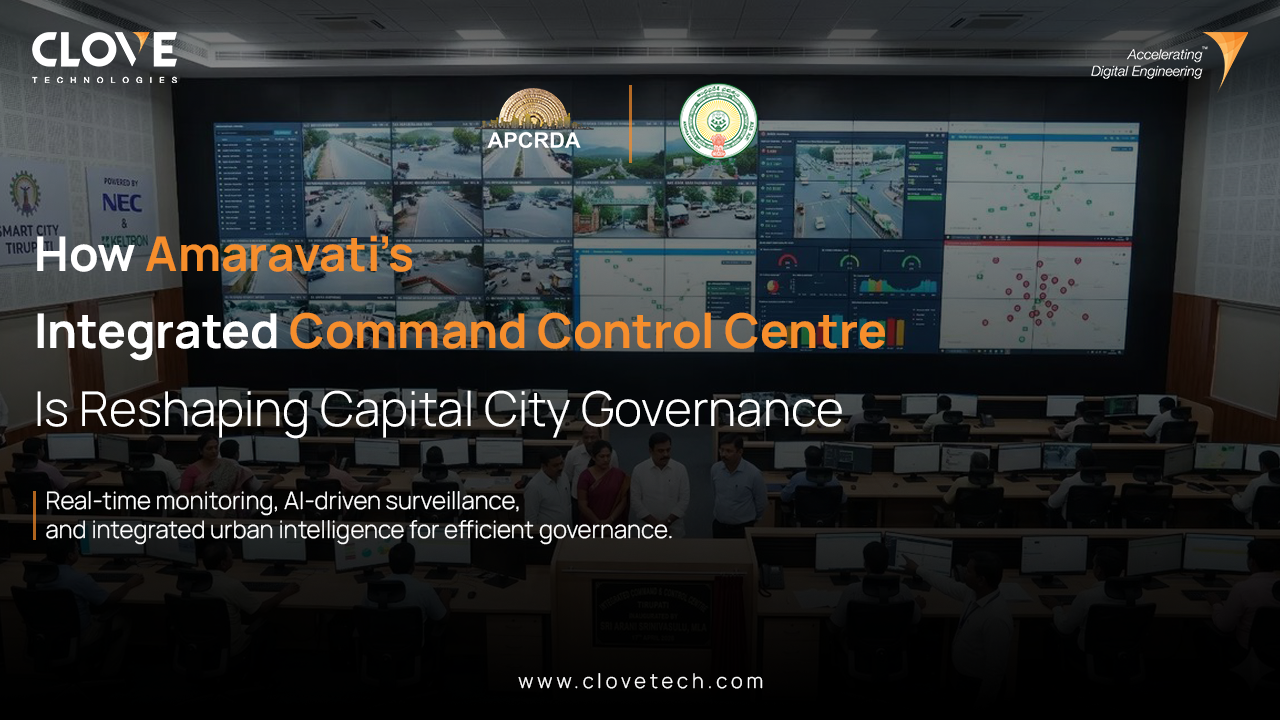
How ICCC Technology Is Revolutionizing Governance in Amaravati

10 Key Benefits of Using Electrical BIM in MEP Projects
Let's Talk
Let’s discuss your requirements and see how our expertise can help on your next project.