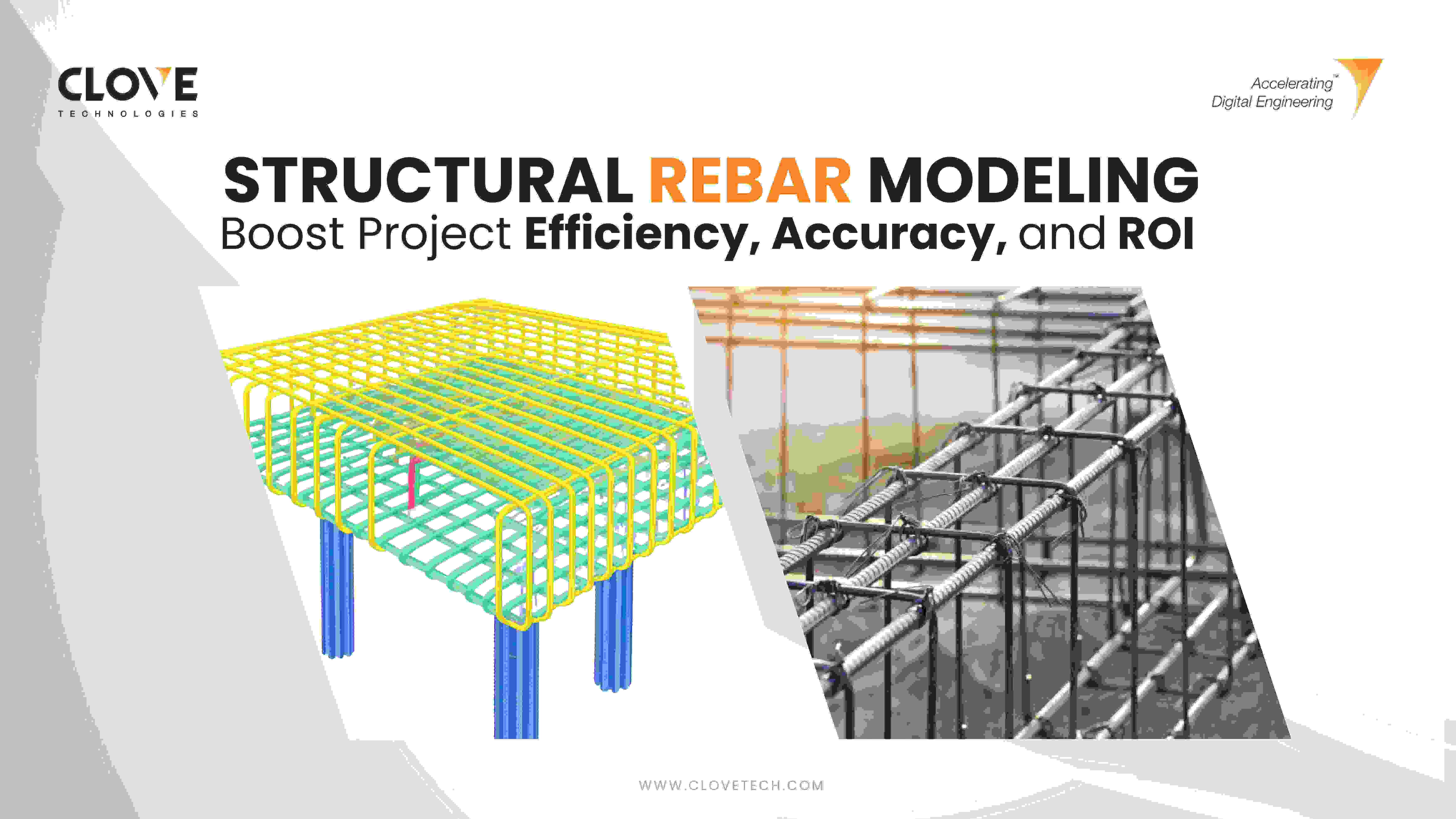
As the construction industry accelerates its digital transformation, precision, coordination, and efficiency have become fundamental to project success. Structural rebar modeling provides contractors, engineers, and developers with a data-driven approach to reinforcement detailing, minimizing high-impact errors, optimizing material utilization, and improving overall project delivery timelines.
Organizations that continue to rely only on traditional 2D reinforcement plans risk inefficiencies, coordination conflicts, and avoidable cost inefficiencies. Transitioning to advanced 3D rebar modeling enhances accuracy, strengthens collaboration, and directly contributes to improved project profitability.
Rebar modeling is the process of creating a 3D digital representation of the steel reinforcement bars (rebar) used within concrete structures. This digital twin model includes accurate details about the rebar’s size, shape, bends, connections, and placement within the concrete elements. Essentially, it’s a virtual prototype of the rebar cage before it’s ever fabricated or installed on-site.
Rebar modeling is the process of creating a 3D digital representation of the steel reinforcement bars (rebar) used within concrete structures. This digital twin model includes accurate details about the rebar’s size, shape, bends, connections, and placement within the concrete elements. Essentially, it’s a virtual prototype of the rebar cage before it’s ever fabricated or installed on-site.
Structural rebar modeling specifically focuses on the rebar’s role in the overall structural integrity of a building or infrastructure project. It goes beyond just depicting individual bars, considering how the rebar interacts with the concrete, other structural components, and the forces it will need to withstand. This type of modeling is heavily integrated with structural analysis and design, ensuring the rebar layout precisely matches engineering specifications for strength, durability, and safety.
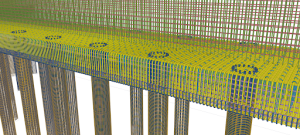
- Enhanced accuracy and reduced Errors:
By creating a detailed 3D models, clashes between rebar and other structural elements (like pipes or conduits) can be identified and resolved virtually before construction begins. This drastically minimizes on-site errors, rework, and material waste.
- Improved collaboration and communication:
The 3D model provides a clear, visual representation of the rebar, fostering better understanding and communication among engineers, detailers, fabricators, and on-site crews. Everyone is working from the same precise information.
- Optimized material usage and cost savings:
Accurate rebar modeling allows for precise material take-offs, leading to optimized ordering of rebar. This reduces surplus material and associated costs, including storage and waste disposal. - Accelerated project schedules:
With fewer errors and improved coordination, the rebar fabrication and installation processes become much more efficient. This translates to faster project completion times and reduced labor costs.
Enhanced safety:
By identifying potential constructability issues in advance, structural rebar modeling contributes to a safer work environment. Less on-site cutting, bending, and adjustments mean fewer risks for workers.
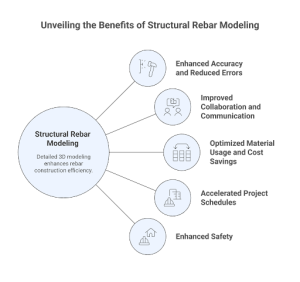
- Relying on manual or 2D reinforcement detailing can lead to:
- Frequent clashes and rework
- Material wastage and cost overruns
- Project delays and penalties
- Structural inaccuracies
- Stakeholder disputes
- Reduced profit margins
In competitive markets, these risks can severely impact ROI.
Absolutely, yes! The Return on Investment (ROI) for structural rebar modeling is often substantial. While initial investment in software and training is required, the long-term savings and benefits far outweigh these costs. The ROI is realized through:
- Reduced material waste
- Decreased rework and labor costs
- Faster project completion
- Improved safety
- Minimized risk of structural failures
Many companies report significant cost reductions and efficiency gains after adopting rebar modeling, making it a highly profitable investment.
- Assess current workflow: Identify pain points in your current rebar detailing and construction process.
- Define objectives: Clearly outline what you aim to achieve with rebar modeling (e.g., reduce errors, save costs, improve collaboration).
- Evaluate team readiness: Consider your team’s existing skills and willingness to adopt new technology.
- Research software options: Explore various rebar modeling software available in the market.
- Calculate potential ROI: Estimate the potential savings and benefits based on your project types and volumes.
- Plan for training: Allocate resources for comprehensive training of your team.
- Secure management: Ensure leadership supports the investment and adoption.
Expert 3D Rebar Modeling Services for Construction Projects
At Clove Technologies, we specialize in delivering high-precision 3D structural rebar modeling services that empower your projects with accuracy, efficiency, and safety. Our expert team leverages advanced modeling tools and industry best practices to ensure clash-free detailing, optimized material usage, and seamless coordination across project stakeholders. Whether it’s a simple structure or a complex infrastructure project, CloveTech’s proven workflow guarantees reduced errors, minimized waste, and faster project delivery. With a strong focus on ROI and constructability, we help construction firms, contractors, and engineering consultants stay ahead in a competitive market.
Q: Will rebar modeling make my project more expensive?
A: While there’s an initial investment in software and training, rebar modeling often leads to significant cost savings in the long run by reducing errors, waste, and delays.
Q: How long does it take to get used to rebar modeling software?
A: The learning curve varies, but with dedicated training, teams can become proficient relatively quickly. Many software providers offer comprehensive training programs.
Q: Is rebar modeling only for large, complex projects?
A: Not at all! While highly beneficial for complex projects, rebar modeling can bring efficiency and accuracy improvements to projects of all sizes.
Q: Can rebar modeling help avoid mistakes on-site?
A: Absolutely. By identifying and resolving clashes and design issues in the virtual model, rebar modeling dramatically reduces errors and rework needed on the construction site.
Q: How does rebar modeling improve project timelines?
A: By streamlining the detailing, fabrication, and installation processes, and minimizing on-site problems, rebar modeling helps keep projects on schedule and often leads to earlier completion.
Build Stronger. Build Faster. Build Right.
Partner with Clove Technologies for expert structural rebar modeling services that maximize efficiency and ROI.
Schedule a Free Consultation Today
Connect with Clove Technologies now and transform your reinforcement detailing process into a profit-driven advantage.
Discover more of our innovative blogs

What is Navisworks? A Complete Guide for BIM and Construction Professionals
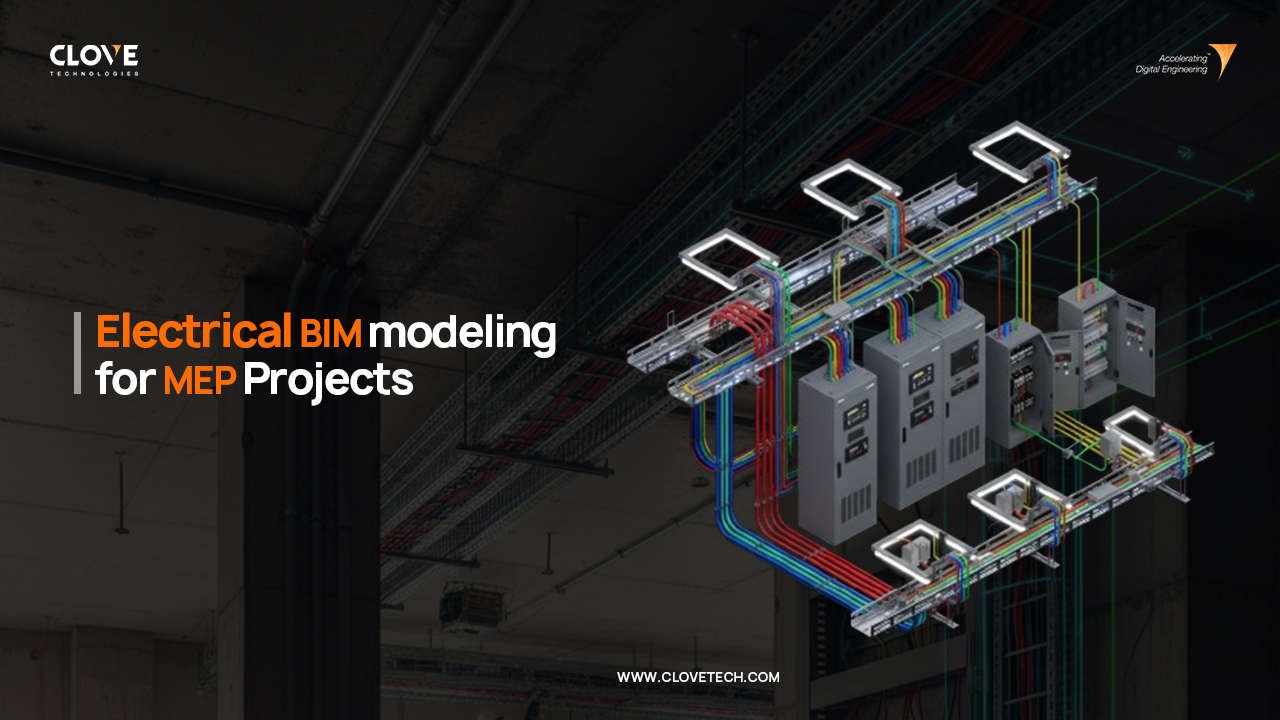
How Electrical BIM Modeling Improves Coordination in MEP Projects

ISO 19650 Certified: Clove Technologies BIM Excellence

BIM for Earthquake Resilience: How Structural BIM Is Transforming Seismic-Safe Construction in the U.S
Let's Talk
Let’s discuss your requirements and see how our expertise can help on your next project.