
The advanced digital approach to designing and coordinating electrical systems has revolutionized how construction professionals execute projects particularly those with complex, cross border workflows. Electrical BIM modeling has emerged as a cornerstone of global project success.
More than just a shift from 2D to 3D, Electrical BIM enables precision, cost control, and seamless collaboration across geographies. Whether managing high rise developments, industrial parks, or healthcare infrastructure, BIM for electrical systems ensures efficiency at every stage.
Electrical BIM is the digital modeling and management of electrical components within a building’s 3D design environment. Instead of traditional flat drawings, BIM uses intelligent objects to represent lighting systems, conduits, cable trays, panels, fire alarms, and power distribution in a way that allows for real-time collaboration, accurate quantity take offs, and early clash detection.
This 3D driven, data enriched modeling process empowers engineers, designers, MEP consultants, and contractors to design smarter, avoid errors, and optimize resource usage especially in large scale international projects.
Major advantages that make Electrical BIM an essential element of global construction:
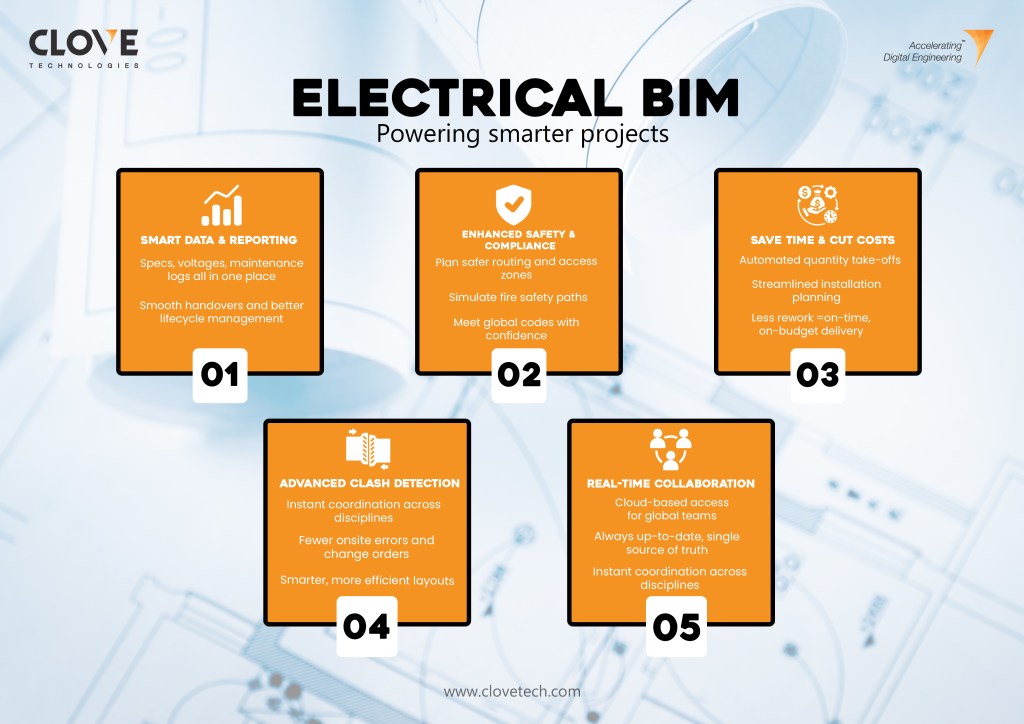
1. Real-Time Collaboration Across Geographies
With BIM’s cloud-based environment, teams across the globe can collaborate in real time using the same centralized model. This ensures:
- Elimination of duplicate versions or outdated data
- Synchronized design updates across disciplines
- Faster issue resolution with visual coordination
2. Advanced Clash Detection & Coordination
BIM for electrical systems integrates with HVAC, plumbing, fire protection, and structural elements detecting design clashes early. This helps:
- Prevent costly onsite errors.
- Reduce change orders.
- Improve MEP layout efficiency.
3. Time and Cost Savings
Electrical BIM supports:
- Automated quantity take-offs for accurate estimation.
- Optimized installation workflows.
- Reduced rework and material waste Projects stay on schedule and within budget thanks to better planning and transparency.
4. Data-Driven Documentation & Smart Reporting
Each BIM element stores detailed data like:
- Voltage requirements
- Manufacturer specs
- Maintenance logs
This enables precise documentation, facility handover, and lifecycle management.
5. Improved Safety & Compliance
With BIM, project teams can:
- Simulate and plan safer electrical routes
- Analyze access paths and fire safety zones
- Meet international safety codes and compliance standards more easily
Why Electrical BIM Is Essential for Global Construction Success
From hospitals and airports to smart cities and high rises, Electrical BIM modeling brings structure and clarity to MEP design. It ensures:
- Faster stakeholder approvals
- Better system performance
- Scalable, compliant electrical design workflows
Electrical BIM isn’t just beneficial it’s fundamental to delivering complex, high performance buildings.
At Clove Technologies, we specialize in MEPF BIM services, offering:
- Detailed electrical layout drawings
- 4D/5D MEP coordination and clash-free designs
- Construction ready documentation
- Comprehensive electrical BIM modeling
1. What is Electrical BIM and how is it different from traditional design?
Electrical BIM uses intelligent 3D models rather than static 2D blueprints. It enables better visualization, design coordination, and data access throughout the building lifecycle.
2. How does Electrical BIM help with global construction?
It supports real-time collaboration across borders, allowing engineers, designers, and contractors from different regions to work on the same project model simultaneously.
3. What is clash detection in Electrical BIM?
Clash detection refers to identifying design conflicts between electrical systems and other building components like HVAC, plumbing, and structure before they occur on-site.
4. Is Electrical BIM suitable for small projects too?
While it’s highly beneficial for large-scale projects, BIM can be adapted for small and medium-scale buildings where detailed MEP coordination and future scalability are important.
Our BIM experts leverage tools like Revit MEP, Navisworks, and AutoCAD Electrical to deliver accurate 3D models that support seamless design coordination, prefabrication, and risk mitigation.
Contact us today to bring precision, clarity, and collaboration to your next electrical project.
Discover more of our innovative blogs

How MEP BIM Enhances the Design and Construction of High-Performance Buildings

Delivering BIM Excellence Around the World

Complete Foundation Plan Guide: Purpose, Applications & Steps

BIM-GIS Integration: Connecting Building & Geospatial Data
Let's Talk
Let’s discuss your requirements and see how our expertise can help on your next project.