The Future of the AECO Industry: How BIM, Digital Twins, AI, and Reality Capture Are Transforming Construction
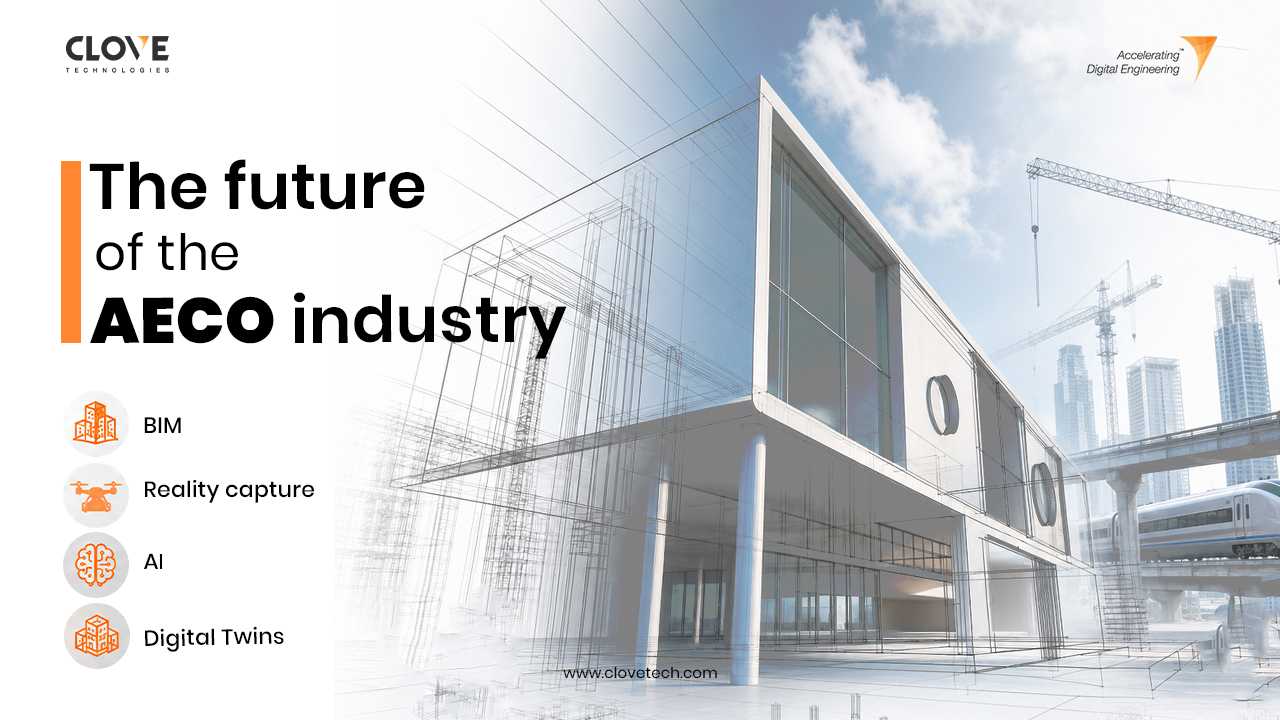
Every Technology Works. The Real Challenge Is Knowing What Comes First.
The AECO industry has embraced digital transformation faster than ever before. Building Information Modelling (BIM), Artificial Intelligence (AI), Digital Twins, and Reality Capture are no longer emerging concepts; they are becoming essential tools for delivering modern AECO projects.
Yet many organisations continue to struggle with digital adoption. The issue isn’t a lack of technology. It’s a lack of strategy.
Many firms invest in individual tools without understanding how those technologies connect. They implement BIM for design, purchase drone equipment for surveys, experiment with AI for planning, or launch Digital Twin initiatives only to discover that these systems operate in isolation.
The result is fragmented data, disconnected workflows, and limited business value. The most successful AECO construction companies don’t simply adopt new technologies, they implement them in the right sequence, ensuring that each solution strengthens the next.
Instead of asking, “Which technology should we invest in?”, leaders are now asking a more important question:
“How do we build a connected digital ecosystem that delivers value throughout the asset lifecycle?”
Schedule a Meeting Explore Industry Insights
Traditionally, the Architecture, Engineering, and Construction (AEC) industry focused on designing and constructing buildings. Once a project was completed, responsibility shifted to the owner or facility manager, and much of the valuable project data was left behind.
Today’s AECO industry takes a different approach.
The “O” stands for Operations, recognising that a building or infrastructure asset continues generating value and requires investment for decades after construction is complete.
In fact, operational costs over a building’s lifetime often exceed its initial construction costs. This shift has changed how organisations approach digital transformation.
Instead of treating project information as temporary documentation, companies now manage it as a long-term digital asset that supports maintenance, renovations, sustainability, and operational efficiency.
This lifecycle mindset is reshaping how AECO projects are planned and delivered.
Many organisations assume digital transformation begins with purchasing new technology.
In reality, it begins with improving the flow of information.
Modern AECO construction projects involve architects, engineers, contractors, consultants, owners, and facility managers all working with vast amounts of project data. Without connected systems, information becomes scattered across spreadsheets, emails, drawings, and multiple software platforms.
This creates common challenges such as:
- Design conflicts between disciplines
- Cost overruns caused by inaccurate data
- Delays due to poor collaboration
- Duplicate work across project teams
- Limited visibility into project progress
Digital transformation addresses these issues by ensuring every stakeholder works from a shared and reliable source of information. Technology becomes valuable only when data flows seamlessly from one stage of the project to the next.
Every successful digital transformation in the AECO industry begins with reliable project data, and that’s exactly what Building Information Modelling (BIM) provides.
More than just a 3D model, BIM creates an intelligent digital representation of a building by storing geometry, material specifications, quantities, schedules, and asset information in one central model. This shared source of truth improves collaboration between architects, engineers, contractors, and owners throughout the project lifecycle.
With BIM, project teams can:
- Detect design clashes before construction begins
- Improve quantity take-offs and cost estimation
- Reduce rework and project delays
- Strengthen collaboration across disciplines
- Support long-term facility management
However, even the most detailed BIM model depends on accurate site information. That’s where Reality Capture plays a crucial role.
Construction projects rarely match original drawings exactly. Site conditions change, renovations introduce unknowns, and ageing infrastructure often lacks reliable documentation.
Reality Capture technologies including 3D laser scanning, LiDAR, drone surveys, and photogrammetry capture existing conditions with exceptional accuracy. Through Scan to BIM workflows, this data is transformed into intelligent digital models that reflect the real environment rather than assumptions.
Reality Capture is especially valuable for:
- Building renovations
- Infrastructure upgrades
- Industrial facilities
- Heritage restoration
- Facility management
Accurate site data reduces project risks and creates a stronger foundation for advanced technologies like AI and Digital Twins.
Once accurate project data is available, Artificial Intelligence helps organisations make better decisions.
AI analyses large volumes of project information to identify trends, predict risks, and automate repetitive tasks. Instead of replacing engineers or project managers, it supports them with faster, data-driven insights.
Today, AI helps the AECO industry by:
- Predicting project delays
- Improving cost estimation
- Monitoring construction progress
- Identifying safety risks
- Automating document management
The value of AI depends on the quality of the underlying project data, making BIM and Reality Capture essential first steps.
A Digital Twin combines BIM, Reality Capture, AI, and real-time operational data into a single intelligent platform.
Unlike a static 3D model, a Digital Twin continuously updates using data from sensors, building management systems, and inspections. This enables owners to monitor asset performance, predict maintenance requirements, improve energy efficiency, and make informed operational decisions.
For airports, hospitals, industrial facilities, and smart city developments, Digital Twins provide measurable long-term value by supporting smarter asset management throughout the building lifecycle.
Many organisations begin their digital transformation journey by investing directly in a Digital Twin platform. Unfortunately, this often leads to disappointing results.
Without an accurate BIM model, validated site information, and structured project data, a Digital Twin becomes little more than a visual dashboard.
Successful AECO projects follow a connected sequence:
BIM → Reality Capture → AI → Digital Twin
Each stage strengthens the next, creating a digital ecosystem that supports the entire asset lifecycle.
As digital technologies continue to evolve, many organisations are establishing AECO Innovation Labs to evaluate new tools before deploying them across large-scale projects.
These innovation environments allow teams to:
- Test AI-powered workflows
- Automate BIM processes
- Evaluate Digital Twin platforms
- Improve Reality Capture techniques
- Develop cloud-based collaboration strategies
Rather than adopting every new technology, Innovation Labs help organisations identify which solutions deliver measurable business value.
Real-World Digital Transformation at Clove Technologies
At Clove Technologies, digital transformation is applied to real infrastructure and engineering projects, not just demonstrations.
Our expertise includes:
- Building Information Modelling (BIM)
- Scan to BIM
- Point Cloud to BIM
- Reality Capture
- Digital Twin Development
- GIS & GeoBIM
- MEP BIM Services
- Asset Intelligence Solutions
By integrating these technologies into connected workflows, we help clients improve collaboration, reduce project risks, and create intelligent digital assets that continue delivering value long after construction is complete.
Whether supporting infrastructure, commercial developments, industrial facilities, or smart city initiatives, our approach focuses on delivering accurate data, efficient workflows, and long-term operational success.
The future of the AECO industry isn’t about adopting more software, it’s about creating connected digital ecosystems.
Over the next few years, we can expect to see:
- AI-assisted design becoming standard practice
- Digital Twins managing entire building portfolios
- Greater use of autonomous Reality Capture through drones and robotics
- Cloud-based collaboration connecting global project teams
- Increased adoption of predictive maintenance
- Smarter infrastructure powered by real-time operational data
Organisations that embrace these technologies in the right sequence will be better positioned to deliver faster, safer, and more sustainable AECO construction projects.
Key Takeaways
Before investing in the next digital tool, every organisation should ask:
- Is our BIM data accurate and complete?
- Are we capturing real-world conditions effectively?
- Can our project data support AI-driven insights?
- Are we ready to build a Digital Twin that delivers long-term value?
Answering these questions helps organisations create a scalable digital strategy rather than isolated technology investments.
1. What does AECO stand for?
AECO stands for Architecture, Engineering, Construction, and Operations. It represents the complete lifecycle of a built asset, from planning and design to long-term operations and maintenance.
2. Why is BIM important in the AECO industry?
BIM provides an intelligent digital model that improves collaboration, clash detection, quantity estimation, and project coordination while serving as the foundation for future digital technologies.
3. How does Reality Capture support AECO projects?
Reality Capture uses technologies such as laser scanning, LiDAR, drones, and photogrammetry to create accurate digital representations of existing conditions, reducing design errors and supporting Scan to BIM workflows.
4. What is the relationship between AI and Digital Twins?
AI analyses project and operational data to generate insights, while a Digital Twin uses those insights alongside live asset data to monitor performance, predict maintenance, and optimise operations.
The AECO industry has moved beyond the question of whether digital technologies work. Today, the real challenge is implementing them in a way that creates lasting business value.
BIM establishes the digital foundation. Reality Capture ensures that data reflects real-world conditions. AI transforms information into actionable insights. Digital Twins bring everything together to support smarter operations throughout an asset’s lifecycle.
When these technologies are implemented as a connected strategy rather than isolated tools, organisations gain greater visibility, improved collaboration, reduced project risk, and better long-term performance.
At Clove Technologies, we help organisations build this connected digital ecosystem through advanced BIM, Reality Capture, Digital Twin, GIS, and engineering solutions. Whether you’re planning new developments or modernising existing infrastructure, our team can help you deliver future-ready AECO projects with confidence.
Ready to transform your AECO projects? Connect with Clove Technologies to explore how our digital engineering solutions can help you design, build, and operate smarter assets for the future.
Discover more of our innovative blogs

How MEP BIM Enhances the Design and Construction of High-Performance Buildings
Delivering BIM Excellence Around the World
Complete Foundation Plan Guide: Purpose, Applications & Steps

BIM-GIS Integration: Connecting Building & Geospatial Data
Let's Talk
Let’s discuss your requirements and see how our expertise can help on your next project.