Project Overview
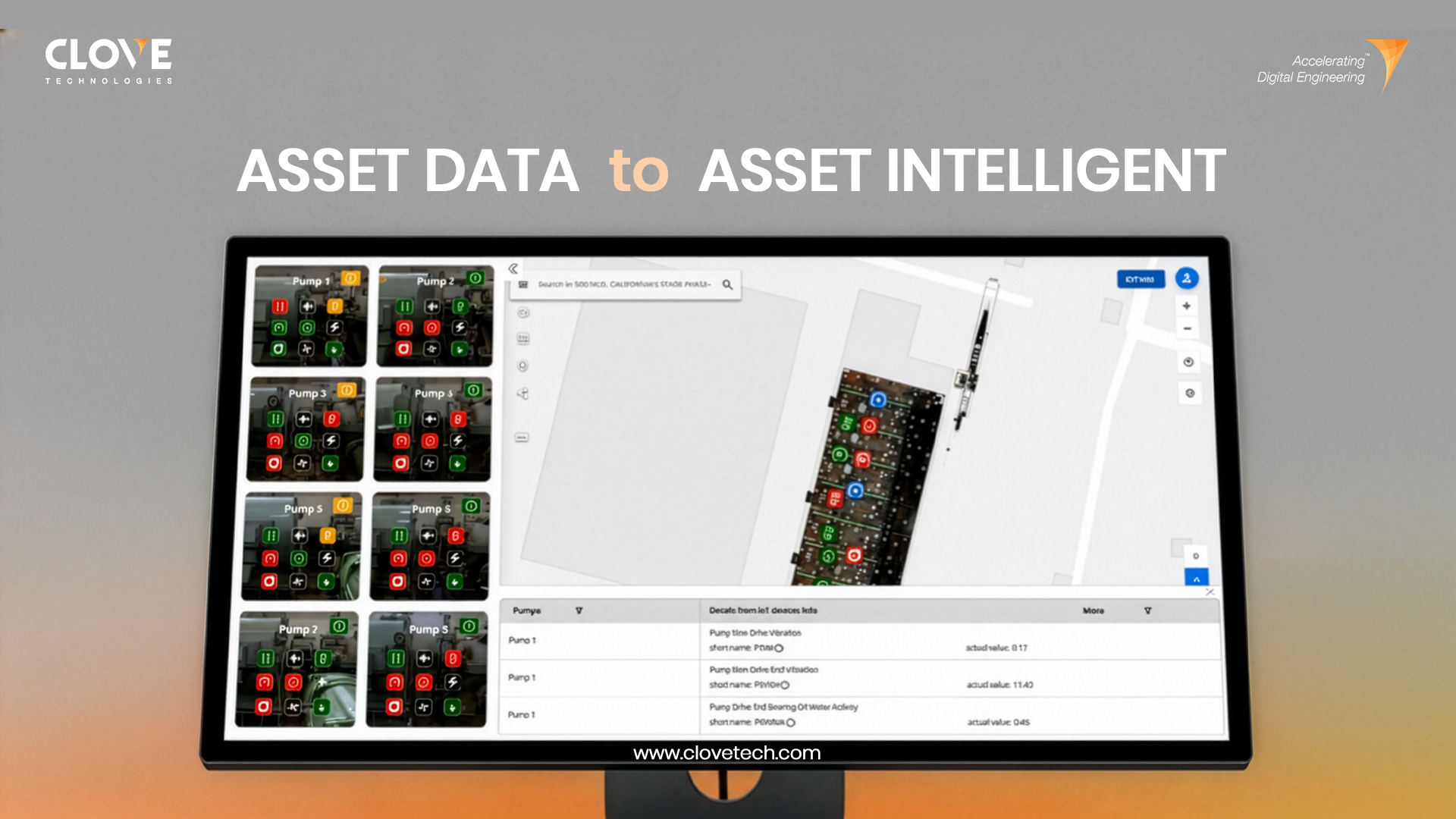
Managing a pumphouse requires more than knowing which pumps, valves, and control panels exist on site. It requires knowing their exact location, their engineering specifications, and their current condition, information that's often split across drawings, equipment manuals, and inspection notes with no shared reference point. Clove Technologies addressed this by building a connected digital twin for a pumphouse facility, combining precision laser scanning, immersive virtual walkthroughs, POI-based asset tagging, and IoT integration into a single environment. The objective was to move the facility from a physical space described in scattered documentation to a structured asset registry that could support ongoing asset integrity monitoring, not just a one-time visual model.
PROJECT INFORMATION:
| Client: | Contractor |
| SERVICE: | Pump House Monitoring & Digital Twin Development |
| INDUSTRY: | Utilities / Infrastructure |
Software Used:
Proven Digital Twin Asset Management for Asset Integrity
A pumphouse is a good test case for asset integrity digital twin work, because the stakes for getting it wrong are immediate. Pumps, valves, piping, and control panels sit in tight, often congested spaces, and a missed inspection or a delayed maintenance response can mean unplanned downtime for whatever system depends on that water or fluid flow. Clove Technologies built a connected digital twin for a pumphouse facility to address exactly this: turning a physical asset that’s hard to inspect and harder to track into a structured, accessible digital environment.
This case study walks through the specifications and workflow behind that project, and why each stage matters for digital twin asset management specifically, not just for a one-time visualization.
Want to know if this approach fits your facility? [Get a brief from Clove Technologies →].
What Is an Asset Integrity Digital Twin?
Asset integrity, in engineering terms, means an asset is fit for purpose, structurally sound, operating safely, and unlikely to fail unexpectedly. An asset integrity digital twin takes that concept and gives it a live, connected home: a digital environment where an asset’s location, engineering specifications, and condition data all sit in one place, instead of scattered across drawings, spreadsheets, and inspection reports.
This is a different starting point than the usual digital twin meaning conversation, which tends to focus on visualization. Asset integrity digital twin work is less about how the model looks and more about whether it can answer a specific question reliably: is this asset still safe and performing as expected? That question is exactly why digital twin asset management is gaining traction faster in asset-heavy sectors infrastructure, energy, industrial facilities than in industries where visualization alone is enough.
Why Digital Twin Asset Management Is Becoming Non-Negotiable
The digital twin market is expanding quickly, and the growth is concentrated where integrity and lifecycle management matter most. Industry estimates put the global digital twin market between roughly $19 billion and $36 billion in 2026, depending on methodology, with most forecasts projecting several-fold growth by the early 2030s. Construction and infrastructure-focused digital twin adoption has been linked to energy savings of up to 50% and operating cost reductions of around 35% in some deployments savings that typically come from better asset condition visibility, not from a nicer-looking model.
North America currently holds close to a third of global digital twin market share, driven largely by predictive maintenance demand and real-time asset monitoring needs, both of which sit at the core of asset integrity digital twin use cases. Organizations that have moved digital twins from pilot projects into core operations also report meaningful reductions in unplanned downtime and measurable gains in asset utilization, which is the practical payoff of digital twin asset management done properly.
The Problem Clove Technologies Was Solving
A facility manager might know an asset ID but have no way to check its current physical condition without a site visit. An engineer might have the technical specification on file but no visibility into how the asset is actually performing. A maintenance team might receive a sensor alert with zero engineering context attached, making it hard to judge whether the alert reflects a real integrity issue or a false positive.
None of these are data problems on their own. They’re connection problems. Clove Technologies built its asset integrity digital twin approach specifically to solve this not by creating another isolated database, but by linking existing asset, engineering, and condition data directly to the physical location it describes.
How Clove Technologies Builds Digital Twin Asset Management, Layer by Layer
- Reality Capture
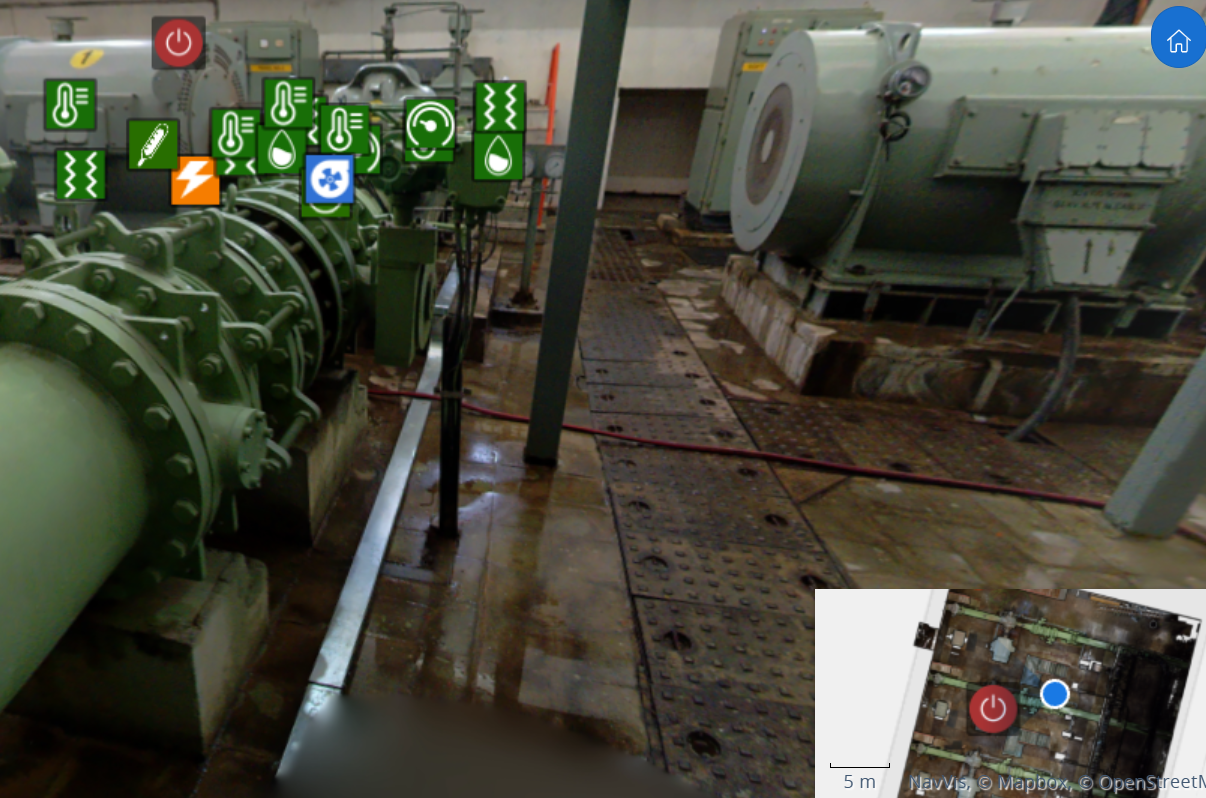
The process starts with laser scanning to capture existing site conditions as high-density point-cloud data. This becomes the spatial foundation of the digital twin model, establishing exactly where each asset sits and what surrounds it, without relying on outdated drawings that may no longer reflect the built condition. - Immersive Virtual Walkthroughs
The captured point-cloud data becomes an interactive walkthrough, letting engineers and facility teams navigate the environment digitally instead of depending on repeated site visits. For asset integrity work specifically, this means faster remote review before committing to a physical inspection. - Asset Registry and POI Tagging
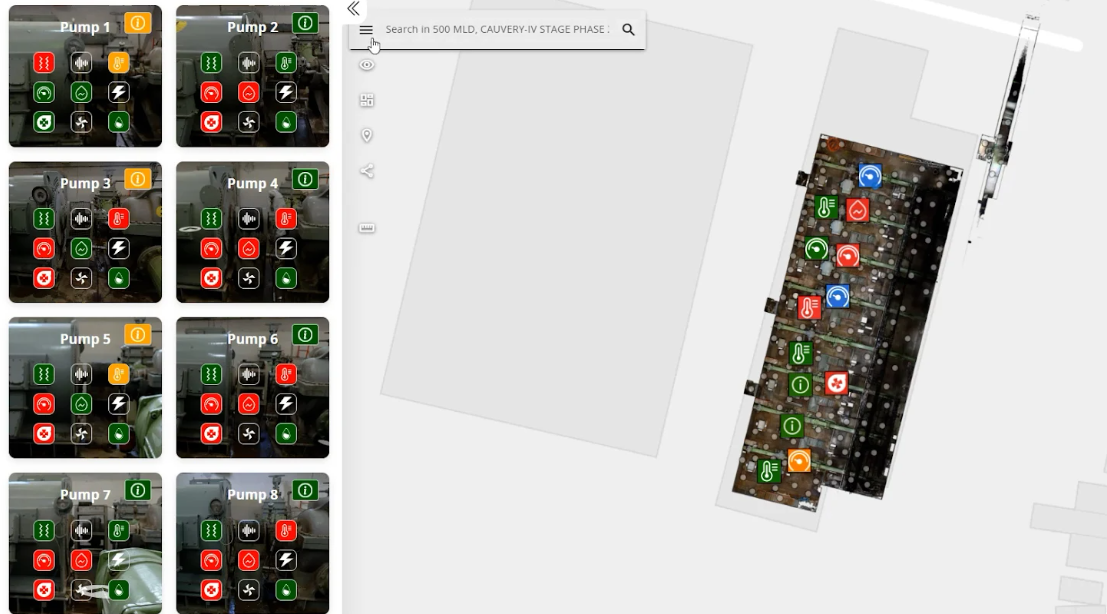
Assets are tagged as Points of Interest inside the digital environment, creating a direct relationship: asset, location, and information. This is the step that turns a walkthrough into an actual asset digital twin, and it’s the structural backbone that digital twin asset management depends on; without accurate tagging, condition data has nowhere reliable to attach to. - Engineering Data Integration
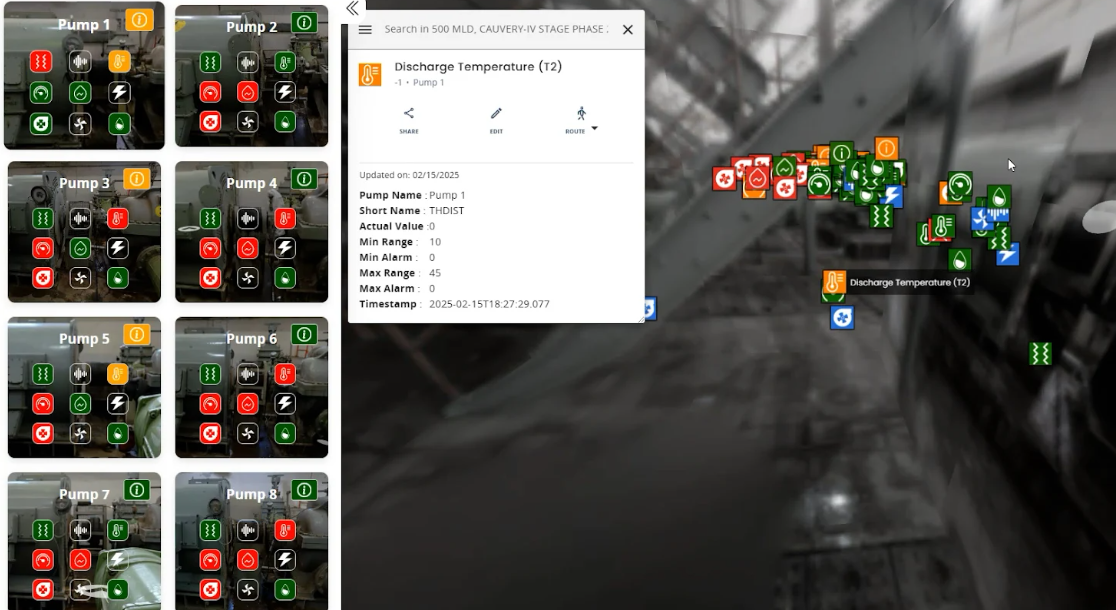
Each tagged asset is connected to its specifications, technical documentation, and asset records. This is what gives an asset integrity digital twin its baseline: the engineering context needed to judge whether current condition data is within normal range or represents a genuine integrity concern. - IoT Integration
Tagged assets can be linked to monitoring systems, real-time alerts, APIs, and custom dashboards. This is the layer that turns a static registry into ongoing digital twin asset management, condition monitoring, alert workflows, and a foundation for predictive maintenance once the asset has enough operating history behind it.
Why Asset Integrity Needs More Than a 3D Model
Plenty of digital twin technology examples in the market stop at visualization a detailed 3D environment with limited data depth underneath. That approach doesn’t hold up for asset integrity work, where the value isn’t in seeing the asset but in trusting the data attached to it. Clove Technologies treats the visual model as an interface into engineering and condition data, not as the deliverable itself.
This distinction is also why asset integrity digital twin projects tend to succeed or fail based on data governance rather than rendering quality: accurate engineering records, correctly tagged assets, and reliable IoT feeds matter far more than visual fidelity.
What Digital Twin Asset Management Enables
- Continuous visibility into asset condition, not just asset location
- Engineering context attached directly to every tagged asset, reducing time spent cross-referencing separate systems
- A structured foundation for integrity monitoring across an asset’s full lifecycle
- IoT-ready infrastructure for alerts, dashboards, and condition-based maintenance planning
- A scalable model that can extend from a single facility to a full portfolio, without rebuilding the underlying structure each time
Ready to Turn Your Asset Registry Into an Asset Integrity Digital Twin?
Most facilities don’t lose money because they’re missing data. They lose it because that data is scattered, asset records in one system, engineering specs in another, inspection history in a folder somewhere, and sensor readings that no one connects back to the asset they belong to. Every manual cross-check is a delay, and every delay is a window where a real integrity issue can go unnoticed.
Clove Technologies builds asset integrity digital twins that close that gap for good. Starting with precision laser scanning and ending with live IoT-connected dashboards, we bring your asset registry, engineering context, spatial data, and monitoring systems into one environment, built around the physical asset itself, not scattered across five different tools.
Whether it’s a single pumphouse or a full portfolio of critical infrastructure, the earlier you connect your asset data, the sooner you move from reactive inspections to continuous, reliable asset intelligence.
Partner with Clove Technologies to build your next asset registry as a digital twin from day one.
Frequently Asked Questions
What is an asset integrity digital twin?
An asset integrity digital twin is a connected digital environment that combines an asset’s location, engineering specifications, and condition data to support ongoing assessment of whether the asset remains safe and fit for purpose.
What is digital twin asset management?
Digital twin asset management is the practice of using a connected digital twin environment to track, monitor, and manage physical assets throughout their lifecycle, combining asset registries, engineering data, and often IoT input.
How is an asset integrity digital twin different from a standard digital twin?
A standard digital twin may focus on visualization or general asset information. An asset integrity digital twin is built specifically around condition and integrity data, with engineering baselines used to judge whether an asset is performing normally.
Does digital twin asset management require IoT sensors?
Not necessarily. Reality capture, asset tagging, and engineering data integration alone can support asset management. IoT adds real-time condition monitoring and alerting once an organization is ready to scale into predictive maintenance.
How big is the digital twin market in 2026?
Estimates place the global digital twin market between roughly $19 billion and $36 billion in 2026, depending on the research firm’s methodology, with several-fold growth projected by the early 2030s.