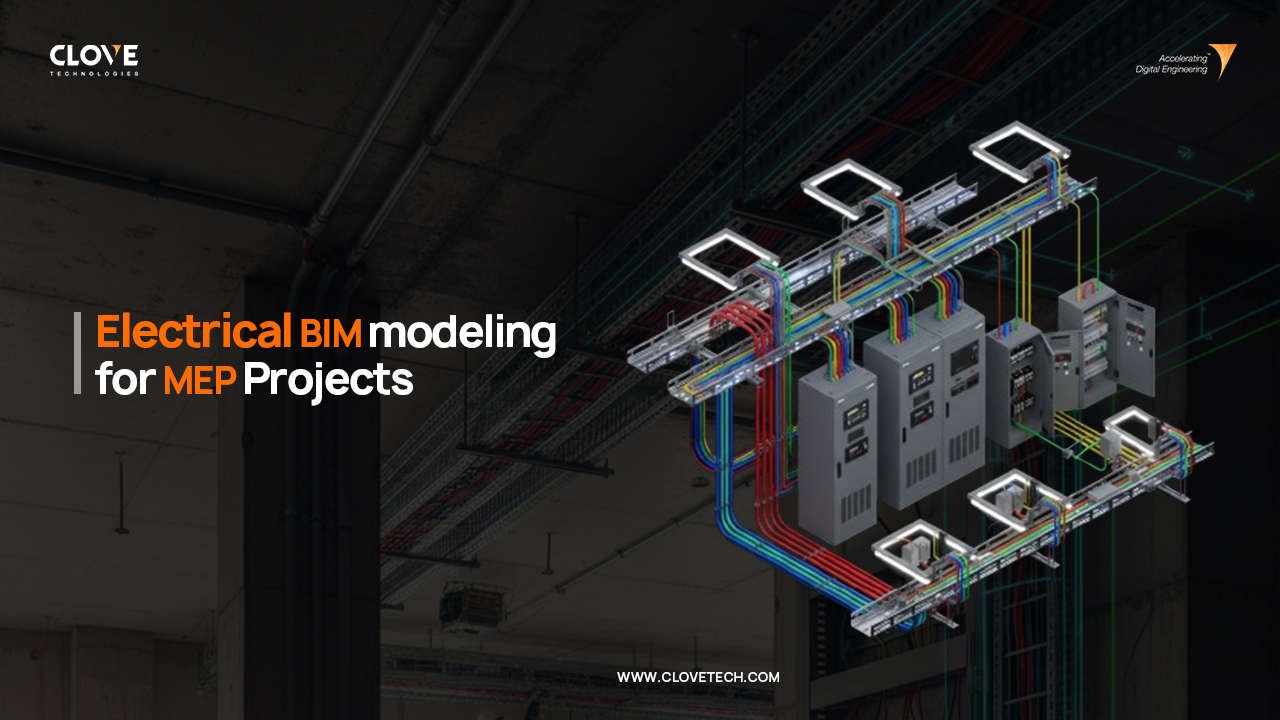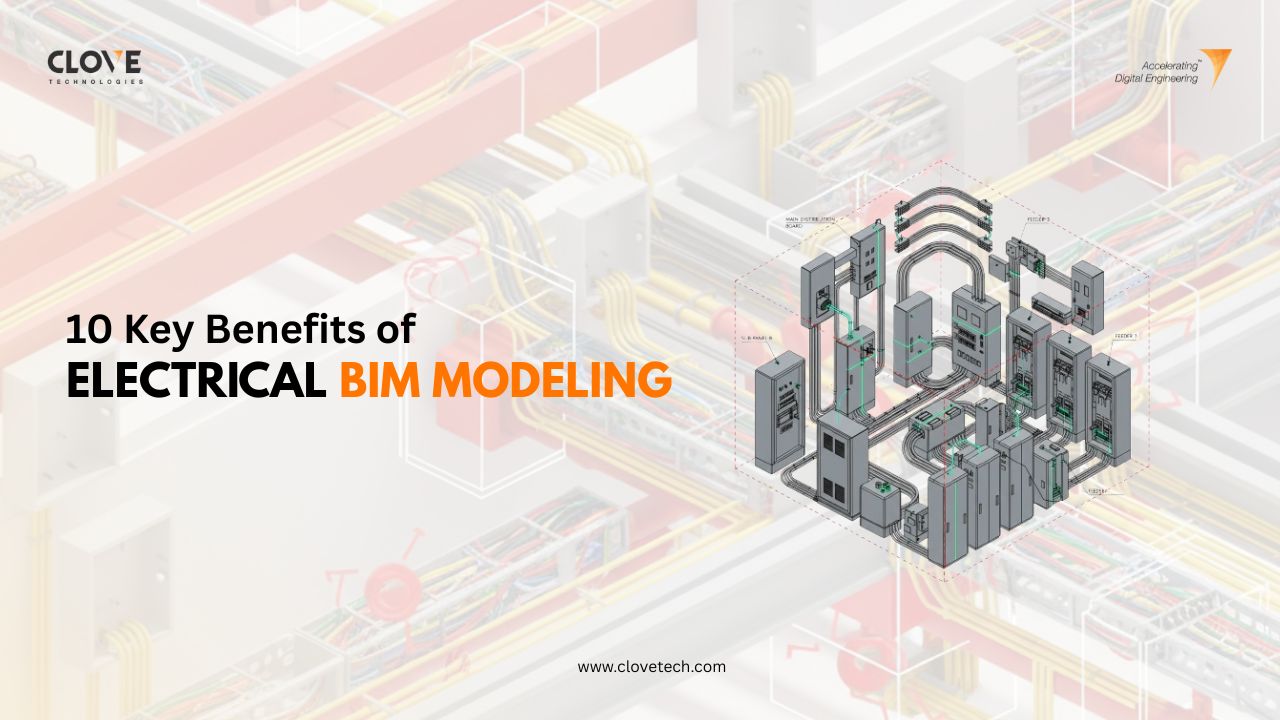
10 Key Benefits of Using Electrical BIM in MEP Projects

In today’s construction and engineering landscape, precision, efficiency, and collaboration are essential for successful project delivery. Electrical systems, being a critical part of MEP (Mechanical, Electrical, and Plumbing) infrastructure, require careful planning, coordination, and execution. Electrical BIM addresses the delays, costly rework, and inefficiencies that arise from poorly coordinated electrical designs.

By integrating an intelligent BIM workflow for MEP, project teams can visualize, plan, and execute electrical systems with greater accuracy, reducing risks and enhancing overall project outcomes. Companies like Clove Technologies provide specialized Electrical BIM Modeling, ensuring smooth project execution and improved design coordination.

Here are the 10 key benefits of using BIM Electrical in MEP projects.
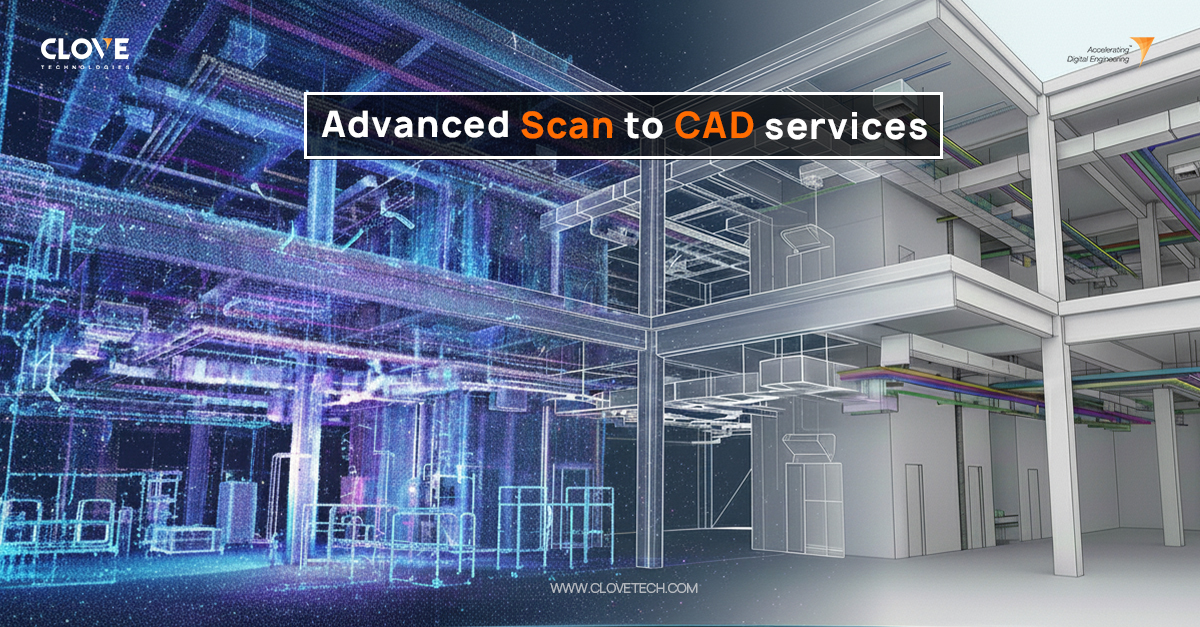
Reduce Project Timelines by 40% with our Advanced Scan to CAD Services

In today’s construction, infrastructure, and industrial environments, accuracy and speed are non-negotiable. Traditional site measurement methods are slow, error-prone, and increasingly incompatible with modern digital workflows. This is where Scan to CAD has become a critical enabler.

Scan to CAD is the process of converting laser-scanned point cloud data into precise, editable CAD Drawings and models. When executed correctly, it bridges the gap between physical reality and digital design, enabling faster decision-making, clash-free planning, and confident execution.

At Clove Technologies, our services are purpose-built to help engineering, architecture, and construction teams reduce rework, compress timelines, and improve downstream coordination. In one recent engagement, our solution reduced overall project timelines by 40% without compromising accuracy.

Scan to CAD vs Scan to BIM – Which Is Right for Your Project in 2026?

In today’s construction and infrastructure world, where precision is key, reality-capture workflows are no longer optional; they are essential for accurate design, avoiding clashes, and data-driven execution. Scan to CAD or Scan to BIM is the most important choice that will shape this change.

Both workflows use 3D Laser Scanning to turn real-world conditions into digital assets, but they do so for different project goals. Selecting the right service is a matter of project scope, lifecycle needs, and information depth not just budget.

This guide clarifies the Scan to CAD vs Scan to BIM comparison, explains the Scan to BIM workflow, and helps you determine which solution best suits your project requirements.

How Electrical BIM Modeling Improves Coordination in MEP Projects

Modern construction projects are no longer linear or siloed. Electrical systems must coexist seamlessly with mechanical and plumbing networks, architectural intent, and structural constraints. In this environment, Electrical BIM Modeling has emerged as a foundational pillar for accurate design, coordination, and execution.

Electrical BIM Modeling enables project stakeholders to visualize, analyze, and coordinate electrical systems within a shared digital environment. For MEP-intensive projects, this capability directly determines project efficiency, cost control, and risk reduction. As coordination complexity increases, the question is no longer if Electrical BIM should be adopted, but how effectively it is implemented.

This article explains why electrical BIM modeling is important, how it improves MEP BIM Coordination, and the measurable advantages it delivers throughout the construction lifecycle.

In-House vs. Outsourced CAD Drafting: Which Is Right for Your Business?

How MEP BIM Enhances the Design and Construction of High-Performance Buildings

Checklist: What to Prepare Before Outsourcing Your Scan to BIM Project